
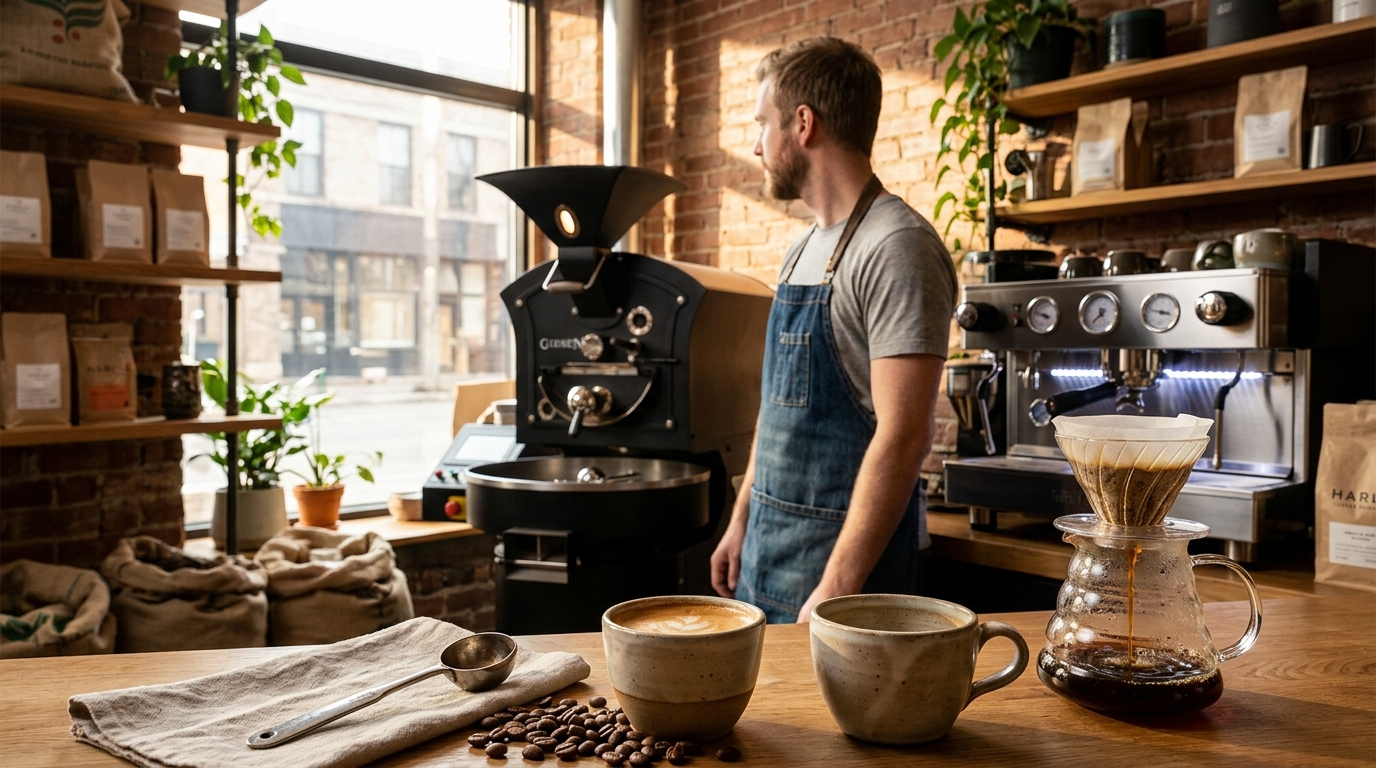
The global coffee industry generates billions in revenue annually, with specialty coffee representing a rapidly growing segment driven by consumer demand for quality and origin transparency. According to market data, the shift toward single-origin and ethically sourced beans has fundamentally changed how roasters approach extraction. At Harlo Coffee Roasters, we believe the first cup is everything, and that begins with selecting the right beans for your specific brewing method. Whether you are pulling a tight shot of espresso or pouring water over grounds for a clean cup, the bean choice dictates the outcome. (Harlo Merch Coffee Brew)
Understanding Bean Types and Origins
Before diving into brewing methods, it is essential to understand the two primary species of coffee beans: Arabica and Robusta. Arabica is widely considered superior in flavor complexity and acidity, while Robusta offers higher caffeine content and a heavier body. Specialty roasters, including Harlo Coffee Roasters, exclusively use 100% Arabica beans to ensure a smooth, aromatic experience. (Harlo Coffee Roasters Specialty)
Geography plays a massive role in flavor development. Ethiopian beans often present floral and fruity notes due to high altitudes and unique processing methods. Colombian beans typically offer a balanced profile with nutty and chocolate undertones. Indonesian beans, such as those from Sumatra, provide earthy, full-bodied characteristics that stand up well to darker roasts. Understanding these terroirs helps you predict how a bean will behave under heat and pressure.
What Makes a Bean Good for Espresso?
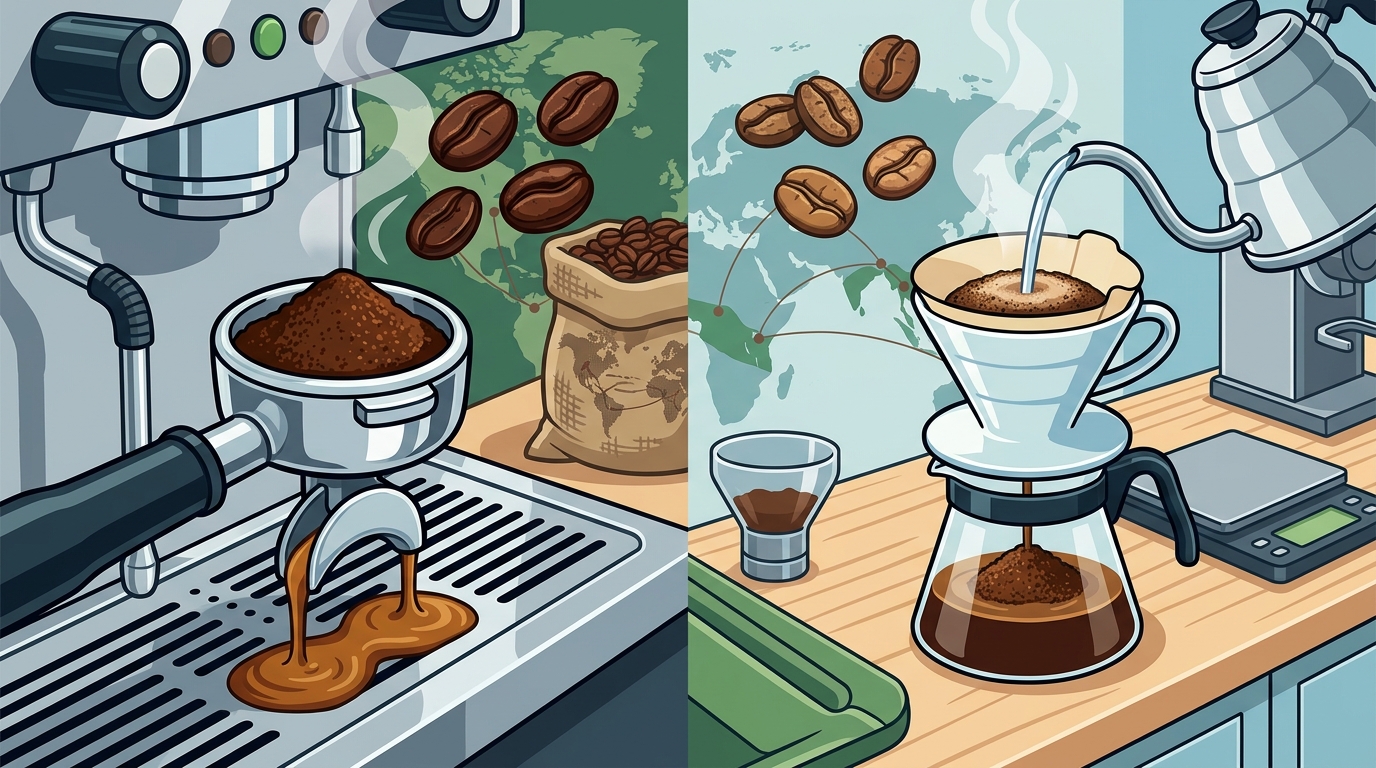
Espresso extraction is a high-pressure process that forces hot water through finely ground coffee in under thirty seconds. This method requires beans that can produce a rich crema and a syrupy body. Research in food science indicates that the chemical composition of the bean, particularly its lipid and sugar content, directly influences the stability of the crema layer.
For espresso, you generally want a bean that can withstand a darker roast without becoming ashy. Darker roasts break down cellular structures, allowing for easier extraction of soluble compounds under pressure. This results in a bold, intense flavor profile that defines traditional espresso. However, modern specialty espresso is moving toward medium-dark roasts to preserve the bean's origin characteristics while maintaining enough body for a satisfying shot.
Blends are often preferred for espresso because they allow roasters to balance acidity and body. By combining a bright Ethiopian bean with a heavy Indonesian bean, you create a complex cup that has both clarity and depth. Single-origin espressos are also gaining popularity among enthusiasts who want to highlight the unique flavor of a specific harvest.
What Makes a Bean Good for Pour Over?
Pour over brewing is a manual method that relies on gravity to pass water through coffee grounds. This technique highlights the delicate nuances of the bean, making it ideal for light to medium roasts. The clarity of flavor in a pour over is unmatched, allowing you to taste specific notes of citrus, berry, or stone fruit that might be masked in an espresso.
For pour over, freshness is critical. Because the brewing time is longer than espresso but the grind is coarser, you need beans that have been roasted recently to preserve volatile aromatic compounds. Studies on coffee chemistry show that degassing begins immediately after roasting, and peak flavor is often found within three to four weeks of the roast date.
Single-origin coffees shine in the pour over method. An Ethiopian Yirgacheffe, for example, will present bright acidity and jasmine notes that are perfectly suited for a gooseneck kettle pour. The precision of the pour over method allows you to control variables like water temperature and flow rate, giving you direct influence over the final cup's strength and flavor profile.
The Impact of Roast Profile
The roast profile determines the balance between acidity and bitterness in your cup. Light roasts retain more of the bean's original acidity and fruity flavors but can be difficult to extract if not brewed correctly. Medium roasts offer a balance, bringing out sweetness while maintaining some origin character. Dark roasts emphasize body and bitterness, often masking the bean's origin with roast-derived flavors like chocolate and caramel.
Chain coffee shops often roast beans very dark to ensure consistency across thousands of locations. Industry analysis suggests that this practice is driven by the need to mask defects in lower-quality beans rather than a preference for flavor. Specialty roasters, however, roast to highlight the bean's potential, often stopping the development process earlier to preserve unique terroir notes.
Harlo Coffee Roasters Recommendations
At Harlo Coffee Roasters, we craft our beans to be versatile and exceptional. Our Mediterranean Coffee collection is inspired by traditional Turkish coffee methods, offering a fine grind that works well for both stovetop and espresso preparation. For those who prefer single origins, our Ethiopian and Colombian selections are roasted to order in Los Angeles to ensure peak freshness.
We recommend starting with our Best Selling Coffee collection to find your preferred profile. If you enjoy bold, aromatic finishes, our Mediterranean Coffee with Cardamom is an excellent choice. For a cleaner, fruit-forward experience, try our Ethiopian Single Origin. Each bag is crafted with the belief that the first cup is everything.
| Brewing Method | Recommended Bean Type | Roast Profile | Flavor Expectation |
|---|---|---|---|
| Espresso | Blends or Dark Roast Single Origin | Medium-Dark to Dark | Bold, Syrupy, Low Acidity |
| Pour Over | Light Roast Single Origin | Light to Medium | Clear, Fruity, High Acidity |
| Mediterranean Style | Fine Grind Arabica | Medium | Aromatic, Spiced, Rich |
Key Takeaways
- Arabica beans are preferred for specialty coffee due to their complex flavor profiles and lower acidity compared to Robusta.
- Espresso requires beans that can produce crema and withstand high pressure, often favoring darker roasts or blends.
- Pour over brewing highlights the delicate nuances of light roast single-origin beans, particularly those from Ethiopia.
- Freshness is critical; beans should be consumed within weeks of roasting for optimal flavor.
- Harlo Coffee Roasters roasts all beans in small batches in Los Angeles to ensure quality and consistency.
- Mediterranean coffee traditions offer a unique alternative to Western brewing methods, emphasizing fine grinds and spices.
- Understanding your bean's origin helps you predict its behavior during extraction and brewing.
Frequently Asked Questions
Can I use any coffee beans for espresso?
While you can use any bean for espresso, beans roasted specifically for espresso or dark roast single origins will yield better crema and body. Light roasts can be used but require precise dialing in to avoid sourness.
What is the difference between single origin and blend coffee?
Single origin coffee comes from one specific farm or region, highlighting unique terroir flavors. Blends combine beans from multiple regions to create a balanced, consistent flavor profile, often used for espresso.
How fresh should my coffee beans be?
For the best flavor, coffee beans should be used within three to four weeks of the roast date. Harlo Coffee Roasters roasts to order to ensure you receive the freshest possible product.
Why does my espresso taste sour?
Sour espresso is usually a result of under-extraction. This can be caused by a grind that is too coarse, water that is not hot enough, or a brew time that is too short. Adjusting these variables can help balance the acidity.
Is Mediterranean coffee different from regular coffee?
Mediterranean coffee is typically finely ground and brewed similarly to Turkish coffee. It often includes spices like cardamom and is enjoyed for its bold, aromatic finish. Harlo Coffee Roasters offers a traditional Mediterranean Coffee blend for this purpose.
What grind size is best for pour over?
A medium grind, similar to sea salt, is generally best for pour over methods. This allows water to flow through the grounds at the right rate, extracting the desired flavors without over-extracting bitter compounds.
Does Harlo Coffee Roasters offer subscriptions?
Yes, Harlo Coffee Roasters offers a subscription service that delivers freshly roasted specialty coffee to your door on your schedule. You can save on every order and skip or cancel anytime.
Start Your Morning Right
Choosing the right coffee beans is the first step to crafting the perfect cup. Whether you prefer the bold intensity of espresso or the nuanced clarity of pour over, Harlo Coffee Roasters has the perfect beans for you. Explore our Best Selling Coffee collection or start a subscription to enjoy fresh, small-batch roasted coffee delivered to your home. Visit our Brew Guides for expert tips on grinding and brewing.