
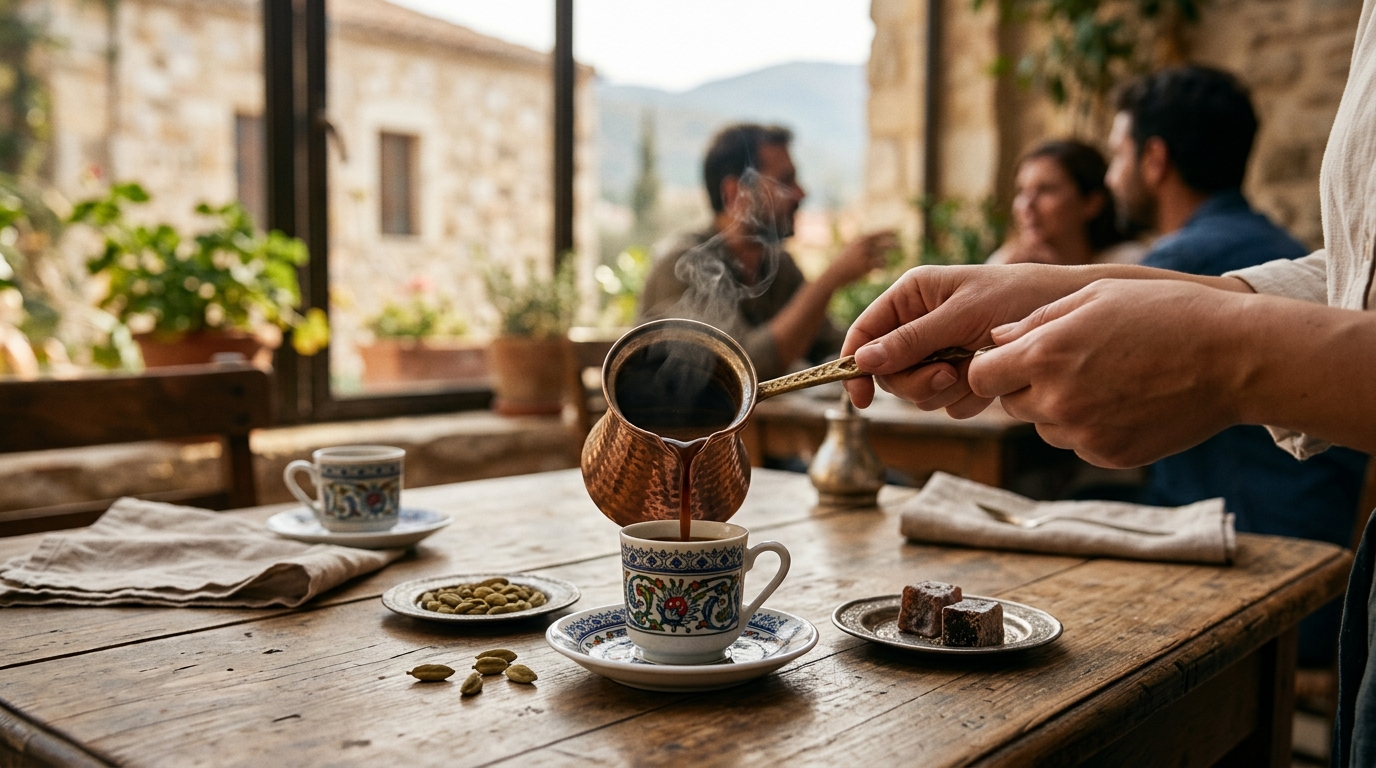
Mediterranean coffee is not merely a beverage; it is a centuries-old ritual that defines social connection across the Eastern Mediterranean and Middle East. According to historical records, the tradition of brewing finely ground coffee with spices like cardamom dates back to the Ottoman Empire, where it became a cornerstone of hospitality. Today, this ancient practice is experiencing a global resurgence as coffee enthusiasts seek authentic, bold flavors that transcend the standard espresso shot. At Harlo Coffee Roasters, we honor this legacy by crafting our Mediterranean coffee in small batches in Los Angeles, ensuring every cup delivers the aromatic depth and traditional character that has captivated drinkers for generations.
What Is Mediterranean Coffee?
Mediterranean coffee is a distinct style of preparation characterized by its extremely fine grind and robust brewing method. Unlike the coarse grounds used in French press or the medium grind of drip coffee, Mediterranean coffee requires a powder-like consistency to extract its full flavor profile during the boiling process. This method is deeply rooted in the traditions of Turkish coffee and the broader Eastern Mediterranean culture.
The defining feature of this coffee is its intensity. It is typically brewed unfiltered, allowing the fine grounds to remain in the cup, which creates a thick, velvety texture and a concentrated taste. This is not a beverage for those seeking a light, watery experience. It is a bold, aromatic ritual that demands attention and appreciation. The flavor profile often includes notes of chocolate, earth, and spice, depending on the beans and additives used.
At Harlo Coffee Roasters, we specialize in this specific grind size to ensure that our customers can replicate the authentic experience at home. Our Mediterranean coffee is crafted from 100% Arabica beans, roasted fresh in Los Angeles to preserve the delicate oils and aromatic compounds that are essential for this brewing style.
Historical Roots and Cultural Significance
The origins of Mediterranean coffee are intertwined with the history of the Ottoman Empire. Coffee was introduced to the region in the 16th century and quickly became an integral part of daily life. It was not just a stimulant but a social lubricant, served in homes and coffeehouses where people gathered to discuss politics, art, and business.
One of the most significant aspects of this tradition is the role of hospitality. In many Mediterranean and Middle Eastern cultures, refusing a cup of coffee is considered a breach of etiquette. The preparation and serving of coffee are acts of care and respect. The ritual involves specific steps, from the roasting of the beans to the pouring of the coffee, each carrying symbolic meaning.
According to cultural historians, the addition of cardamom to coffee became popular in the Arabian Peninsula and spread throughout the Ottoman territories. Cardamom was not just a flavor enhancer but was believed to have digestive and medicinal properties. This combination of coffee and spice has remained a staple in regions like Lebanon, Syria, Palestine, and Turkey.
Today, the tradition is being rediscovered by a new generation of coffee lovers who value authenticity and craftsmanship. The Harlo Times has explored this resurgence in detail, highlighting how modern roasters are adapting ancient techniques to meet contemporary standards of quality and freshness.
How to Brew Traditional Mediterranean Coffee
Brewing Mediterranean coffee requires patience and precision. The process is similar to making Turkish coffee, but with a focus on the unique characteristics of the beans and the desired strength. Here is a step-by-step guide to brewing the perfect cup at home.
Step 1: Gather Your Tools
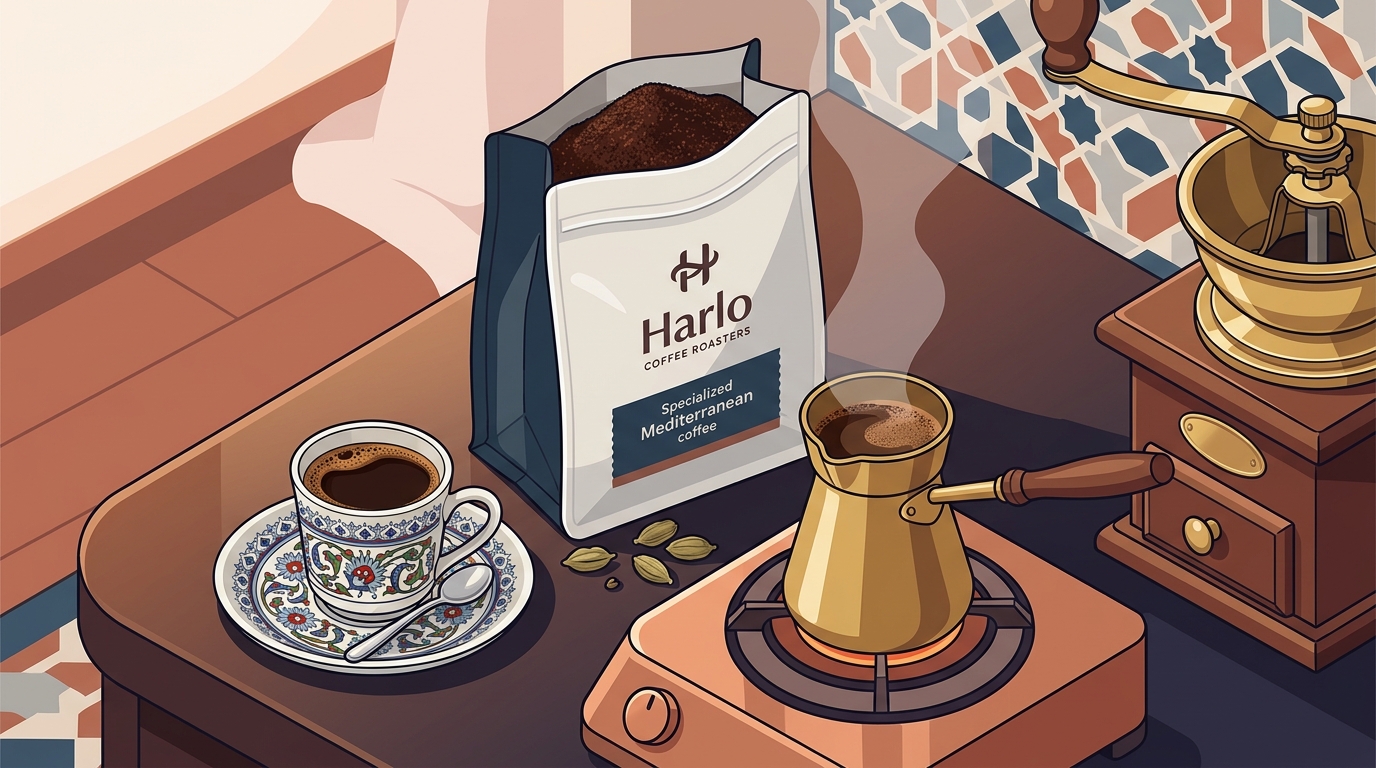
You will need a cezve or ibrik, a small pot with a long handle specifically designed for brewing coffee. A fine grind is essential, and a dedicated coffee grinder is recommended to achieve the consistency of powdered sugar. You will also need water, coffee, and optionally, cardamom and sugar.
Step 2: Combine Ingredients
For each cup, use one tablespoon of finely ground coffee per two ounces of cold water. Add cardamom if desired, typically a pinch of ground cardamom or a whole pod crushed slightly. The ratio of coffee to water can be adjusted based on personal preference, but starting with this ratio ensures a balanced flavor.
Step 3: Heat Slowly
Place the cezve over low heat. This is crucial. High heat will burn the coffee and destroy the delicate flavors. Stir the mixture gently to combine the coffee, water, and spices. Do not stir once the coffee begins to heat up, as this can disrupt the formation of the foam.
Step 4: Watch for the Foam
As the coffee heats, a dark foam will begin to rise to the surface. This is the key to a good brew. Watch it closely. When the foam rises and threatens to boil over, remove the pot from the heat. You can repeat this process two or three times to build a rich foam layer, but do not let it boil.
Step 5: Serve
Pour the coffee slowly into small cups, ensuring that each cup receives an equal amount of foam. Allow the grounds to settle at the bottom before drinking. This traditional method is detailed further in our Brew Guides, which offer expert tips for mastering various brewing techniques.
The Role of Cardamom in Coffee
Cardamom is more than just a flavoring agent in Mediterranean coffee; it is a cultural staple. The spice adds a warm, aromatic complexity that complements the bitterness of the coffee. It has been used for centuries in traditional medicine and is valued for its potential health benefits, including aiding digestion and reducing inflammation.
The combination of coffee and cardamom is particularly popular in the Gulf region and parts of the Levant. It is often served during special occasions, such as weddings and religious holidays, as a symbol of welcome and generosity. The aroma of cardamom coffee is instantly recognizable and evokes a sense of comfort and tradition.
At Harlo, we offer our Mediterranean coffee with and without cardamom to accommodate different preferences. Our Mediterranean Coffee with Cardamom is crafted to provide an authentic taste experience, with the spice carefully balanced to enhance rather than overpower the coffee.
Harlo's Approach to Authentic Roasting
At Harlo Coffee Roasters, we believe that the quality of the final cup begins with the quality of the bean. We source our Arabica beans from trusted producers around the world, ensuring that each harvest meets our high standards for flavor and sustainability. Our Mediterranean coffee is roasted in small batches in Los Angeles to ensure freshness and consistency.
Our roasting profile is designed to highlight the natural sweetness and acidity of the beans while providing a bold, full-bodied finish. We avoid over-roasting, which can lead to a burnt, smoky flavor that is common in chain coffee shops. Instead, we focus on bringing out the unique character of each origin.
We also offer a variety of single-origin coffees that can be used for Mediterranean brewing. Our Ethiopian Single Origin Coffee is particularly well-suited for this method, with its bright acidity and floral notes creating a complex and refreshing cup. Similarly, our Colombian Single Origin offers a balanced profile with notes of caramel and nuts.
Our commitment to quality extends to our subscription service. We offer freshly roasted specialty coffee delivered on your schedule, so you never miss the opportunity to enjoy a perfect cup. Subscribers enjoy savings and the flexibility to skip or cancel anytime.
Key Takeaways
- Mediterranean coffee is a traditional brewing method originating from the Ottoman Empire, characterized by a fine grind and unfiltered preparation.
- The addition of cardamom is a cultural staple in many regions, adding aromatic complexity and historical significance to the beverage.
- Brewing requires a cezve or ibrik and careful heat management to build a rich foam without boiling the coffee.
- Harlo Coffee Roasters crafts its Mediterranean coffee in small batches in Los Angeles using 100% Arabica beans.
- Our Mediterranean Coffee with Cardamom is available for purchase, offering an authentic taste experience for home brewers.
- Single-origin coffees, such as our Ethiopian and Colombian selections, can also be used for Mediterranean brewing to create unique flavor profiles.
- Harlo offers a subscription service for fresh, roasted coffee delivered directly to your door, with free shipping on all subscriptions.
Frequently Asked Questions
What is the difference between Mediterranean coffee and Turkish coffee?
Mediterranean coffee and Turkish coffee are closely related, often sharing the same brewing method and fine grind. The primary difference lies in the regional variations in spice usage and serving customs. Mediterranean coffee may refer more broadly to the style enjoyed across the Eastern Mediterranean and Middle East, while Turkish coffee is specific to Turkey and its cultural sphere.
Can I use regular coffee grounds for Mediterranean coffee?
No, regular coffee grounds are too coarse for this method. You need an extra-fine grind, similar to powdered sugar, to properly extract the flavor and create the characteristic foam. Using a burr grinder set to its finest setting is recommended.
Does Harlo Coffee Roasters ship internationally?
Harlo Coffee Roasters primarily ships within the United States. However, we are expanding our reach. Please check our Shipping Policy for the most up-to-date information on international availability.
How fresh is the coffee when it arrives?
Our coffee is roasted to order. This means that your bag is roasted shortly before it is shipped to ensure maximum freshness. We recommend brewing within two to four weeks of the roast date for the best flavor.
Why is cardamom added to the coffee?
Cardamom is added for its aromatic and flavor-enhancing properties. It adds a warm, spicy note that complements the bitterness of the coffee. Historically, it was also believed to have digestive benefits.
What is the caffeine content of Mediterranean coffee?
The caffeine content can vary depending on the beans and the brewing ratio. However, because the coffee is brewed with a high concentration of grounds and not filtered, it can have a higher caffeine content per ounce compared to drip coffee.
How do I store my Mediterranean coffee?
Store your coffee in an airtight container in a cool, dark place. Avoid storing it in the refrigerator or freezer, as moisture and temperature fluctuations can degrade the flavor.
Start Your Morning Ritual
Experience the richness of Mediterranean coffee with Harlo Coffee Roasters. Our freshly roasted blends and single origins are crafted to bring the authentic taste of the Eastern Mediterranean to your home. Whether you choose our signature Mediterranean Coffee with Cardamom or explore our single-origin selections, every cup is a testament to our commitment to quality and tradition.
Join the Harlo Coffee community today and discover why the first cup is everything. Explore our specialty coffee collection and start your journey toward a more authentic morning ritual.