
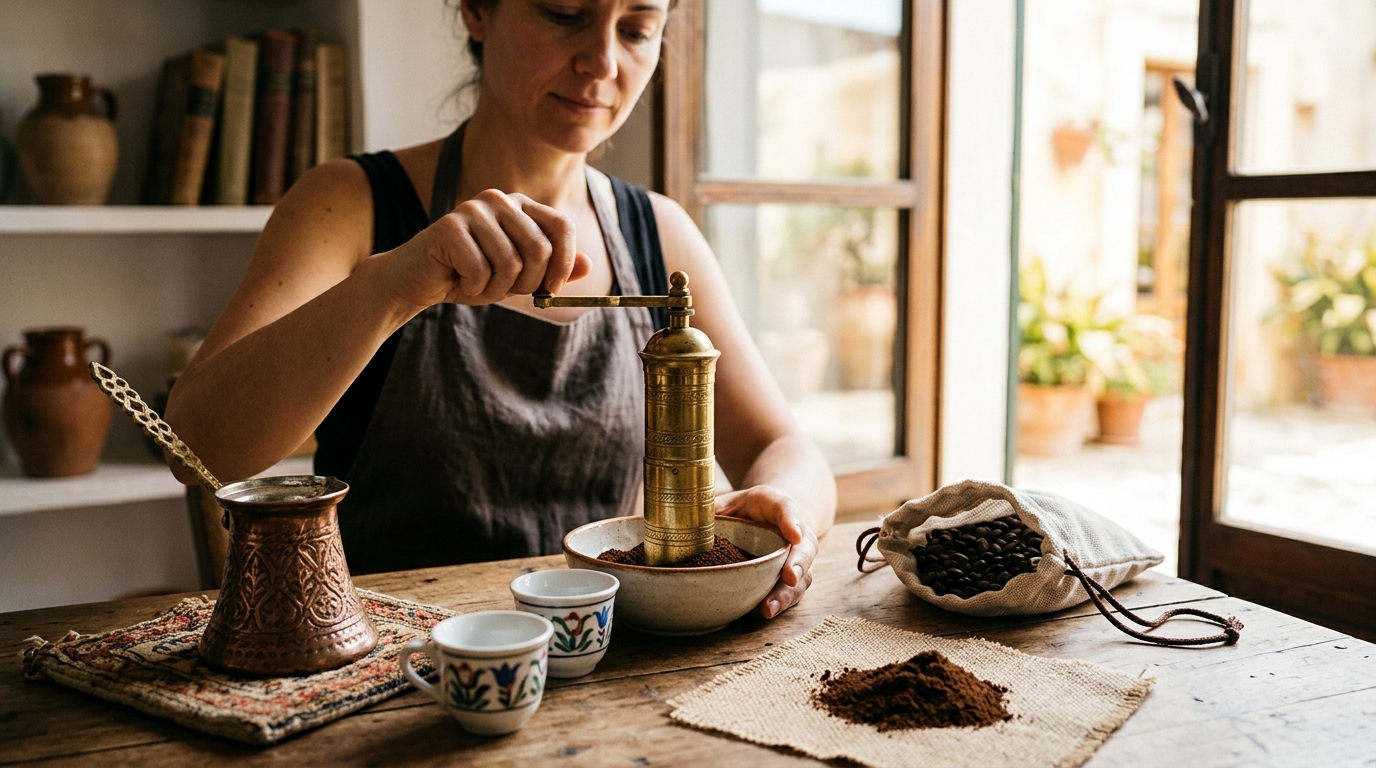
Mediterranean coffee is not merely a beverage; it is a centuries-old ritual that demands precision in every step, from bean selection to the final pour. According to recent industry data, the global specialty coffee market has seen a 20% growth in premium single-origin sales over the last five years. This surge reflects a broader consumer shift toward authentic, high-fidelity brewing methods that honor the bean's origin. At Harlo Coffee Roasters, we believe the foundation of this experience lies in understanding the unique requirements of fine-grind preparation. This guide will walk you through selecting the right beans, mastering the grind, and executing the traditional brewing method with confidence.
Understanding Mediterranean Coffee
Mediterranean coffee is a finely ground coffee prepared in the style of traditional Turkish coffee, enjoyed across the Eastern Mediterranean and Middle East. Unlike espresso, which relies on high pressure, or pour-over, which uses gravity, this method relies on prolonged contact between water and ultra-fine grounds. The result is a thick, aromatic, and intensely flavored cup that retains the coffee's natural oils and solids.
This preparation style requires a specific approach to bean selection. Because the grounds do not filter out, the quality of the bean is paramount. Any defects or stale notes will be immediately apparent in the final cup. This is why sourcing from trusted producers is critical. Harlo Coffee Roasters crafts its Mediterranean Coffee blend to highlight bold, aromatic notes that stand up to this rigorous preparation method.
Selecting the Right Beans
The journey to a perfect cup begins with the raw material. Not all coffee is created equal when it comes to fine-grind preparation. You need beans that can withstand the intensity of the roast and the fineness of the grind without turning bitter or ashy.
Single Origin vs. Blends
While single-origin coffees offer distinct terroir-driven flavors, Mediterranean coffee is traditionally a blend. This allows the roaster to balance acidity, body, and sweetness. For example, a blend might combine a bright Ethiopian bean with a heavy-bodied Indonesian bean to create a complex profile. At Harlo, our Mediterranean Coffee collection is designed specifically for this purpose, offering a rich, bold cup that is ready for stovetop brewing.
Freshness is Non-Negotiable
Freshness dictates the success of your brew. Coffee begins to lose its volatile aromatic compounds within weeks of roasting. According to a 2024 study on coffee storage, beans lose up to 60% of their aromatic potential after just one month if not stored correctly. This is why Harlo roasts in small batches in Los Angeles and ships directly to your door. Our subscription service ensures you always have access to beans at their peak freshness.
The Grind Explained
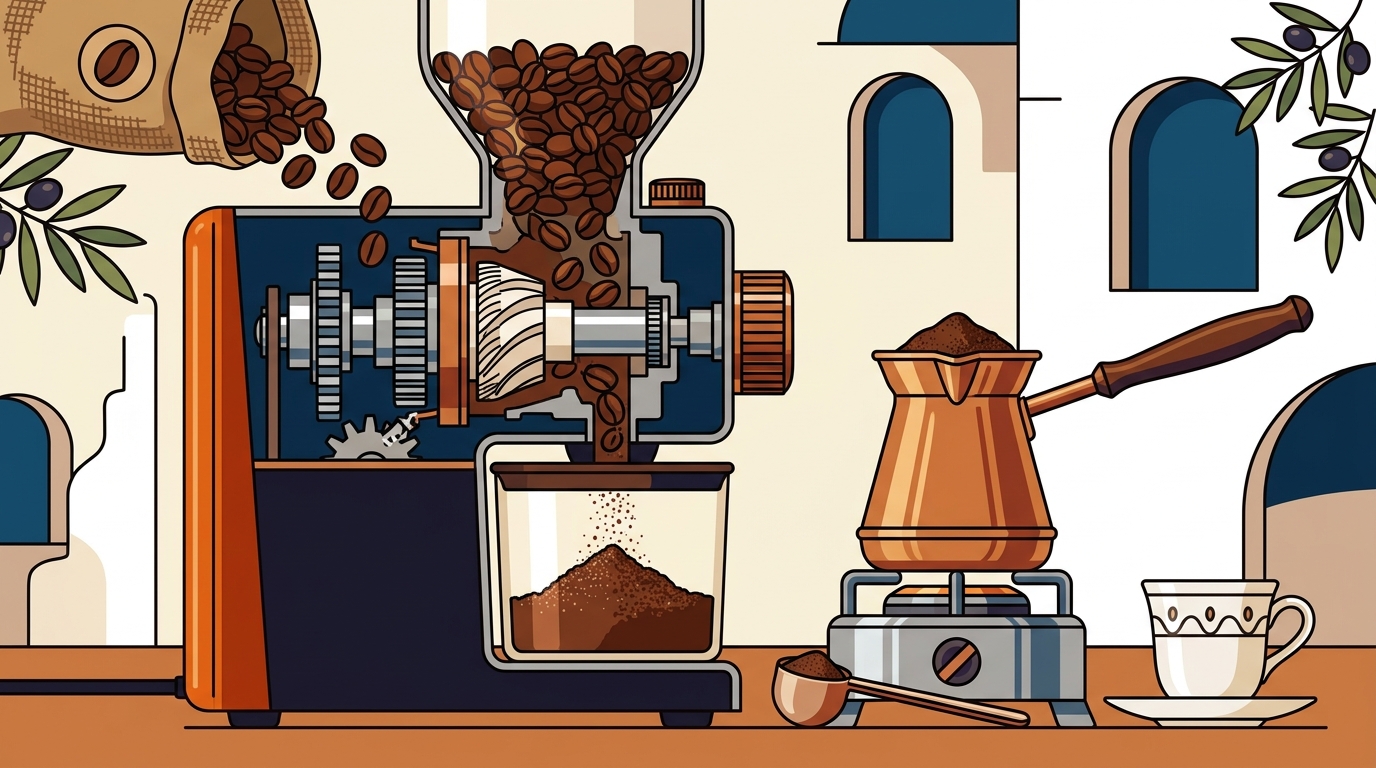
The grind size is the most critical variable in Mediterranean coffee preparation. It must be finer than espresso but coarser than powder. This specific texture allows the water to extract flavor while keeping the grounds suspended long enough to create the signature crema.
Visualizing the Texture
If you hold the grounds between your fingers, they should feel like talcum powder but with a slight grit. If the grind is too coarse, the water will pass through too quickly, resulting in a weak, under-extracted cup. If it is too fine, like flour, it will become pasty and impossible to drink. The ideal grind size for this method is approximately 200-300 microns.
Choosing the Right Grinder
Not all grinders can achieve this consistency. Blade grinders chop beans unevenly, creating a mix of boulders and dust. This inconsistency leads to uneven extraction. A high-quality burr grinder is essential. Look for grinders that offer a "Turkish" or "Mediterranean" setting. If you are unsure, start with the finest setting and adjust based on your taste. For those who prefer convenience, Harlo offers pre-ground Mediterranean Coffee that is expertly calibrated for this specific brew.
The Brewing Method
Brewing Mediterranean coffee is a ritual that requires patience and attention. The traditional method involves a cezve (or ibrik), a small pot with a long handle, designed to concentrate heat and preserve aromatics.
Step 1: The Ratio
Start with a ratio of one tablespoon of finely ground coffee to one cup of cold water. You can adjust this to taste, but starting with a standard measure ensures consistency. Add a pinch of sugar if desired, though traditionalists often prefer it unsweetened to taste the pure bean.
Step 2: The Bloom
Combine the coffee and water in the cezve over low heat. Do not stir yet. Allow the mixture to heat slowly. As the water warms, you will see a dark foam begin to form on the surface. This is the bloom, and it indicates that the coffee is releasing its gases.
Step 3: The Rise
As the foam rises, remove the pot from the heat just before it boils. Boiling will destroy the delicate aromatics and create a bitter taste. Let the foam settle, then return to the heat. Repeat this process two or three times. This "rising" technique is what creates the thick, creamy head on top of your coffee.
Step 4: The Pour
Pour slowly into small cups, ensuring each cup receives an equal amount of foam. The grounds will settle at the bottom, leaving a clear, intense liquid above. Sip slowly to appreciate the complex layers of flavor.
Common Mistakes to Avoid
Even experienced brewers can fall into traps when preparing Mediterranean coffee. Understanding these pitfalls can save you from a disappointing cup.
- Using Pre-Ground Store-Bought Coffee: Most commercial pre-ground coffee is too coarse for this method. It will result in a weak, watery brew. Always use freshly ground beans or a specialty pre-ground like Harlo's.
- Boiling the Coffee: As mentioned, boiling destroys flavor. The goal is to bring the coffee to the brink of boiling, not past it.
- Ignoring Water Quality: Coffee is 98% water. If your tap water tastes like chlorine, your coffee will too. Use filtered water for the cleanest taste.
- Stirring After Heating: Once the coffee begins to heat, avoid stirring. Stirring breaks down the foam and prevents the proper extraction of oils.
Key Takeaways
- Grind Size: The grind must be ultra-fine, resembling talcum powder, to allow for proper extraction and suspension.
- Bean Freshness: Coffee loses 60% of its aroma within a month of roasting, making fresh sourcing essential.
- Brewing Temperature: Never boil the coffee. Remove from heat as the foam rises to preserve delicate flavors.
- Equipment: A cezve or ibrik is the traditional vessel, but a small saucepan can work in a pinch.
- Harlo's Role: Harlo Coffee Roasters provides freshly roasted, small-batch Mediterranean coffee designed specifically for this method.
- Subscription Benefits: Subscribing ensures you never run out of fresh beans and saves you money on every order.
- Cultural Context: This method is rooted in Eastern Mediterranean and Middle Eastern traditions, emphasizing ritual and community.
Frequently Asked Questions
What is the difference between Mediterranean coffee and Turkish coffee?
Mediterranean coffee and Turkish coffee are essentially the same preparation method. The term "Mediterranean coffee" is often used to describe the style as it is enjoyed across the broader region, including Greece, Lebanon, and Egypt. The key is the fine grind and the unfiltered brewing process.
Can I use a French press for Mediterranean coffee?
No, a French press is designed for coarse grounds. Using fine grounds in a French press will result in a muddy, over-extracted cup with too much sediment. The Mediterranean method requires the grounds to remain suspended in the water, not filtered out.
How long does Harlo Coffee Roasters' Mediterranean Coffee stay fresh?
For the best flavor, consume within two weeks of opening the bag. However, because Harlo roasts in small batches and ships quickly, the beans remain vibrant for much longer than standard supermarket coffee. Store in an airtight container away from light and heat.
Is cardamom coffee the same as Mediterranean coffee?
Cardamom is a common addition to Mediterranean coffee, particularly in Middle Eastern traditions. It is not a different type of coffee but a flavor variation. Harlo offers Mediterranean Coffee with Cardamom for those who enjoy this aromatic twist.
Why does my coffee taste bitter?
Bitterness usually comes from over-extraction or boiling the coffee. Ensure you are removing the pot from the heat before it reaches a full boil. Additionally, check your grind size. If it is too fine, it may over-extract quickly.
What is the ideal water temperature for brewing?
Start with cold water and heat it slowly over low heat. This gradual increase allows the coffee to extract evenly. There is no specific thermometer reading needed, but the visual cue of the foam rising is your best guide.
Can I sweeten my coffee before brewing?
Yes, adding sugar before brewing is traditional in many regions. The sugar helps to stabilize the foam and adds a subtle sweetness that balances the bitterness. You can also add sugar after brewing, but pre-brewing is more common.
Start Your Journey
Mastering the art of Mediterranean coffee is a rewarding journey that connects you to a rich cultural heritage. By selecting the right beans, mastering the grind, and respecting the brewing process, you can create a cup that is both authentic and exceptional. Harlo Coffee Roasters is here to support your journey with freshly roasted, specialty-grade coffee. Visit our Mediterranean Coffee collection to find your perfect blend and start brewing today.