
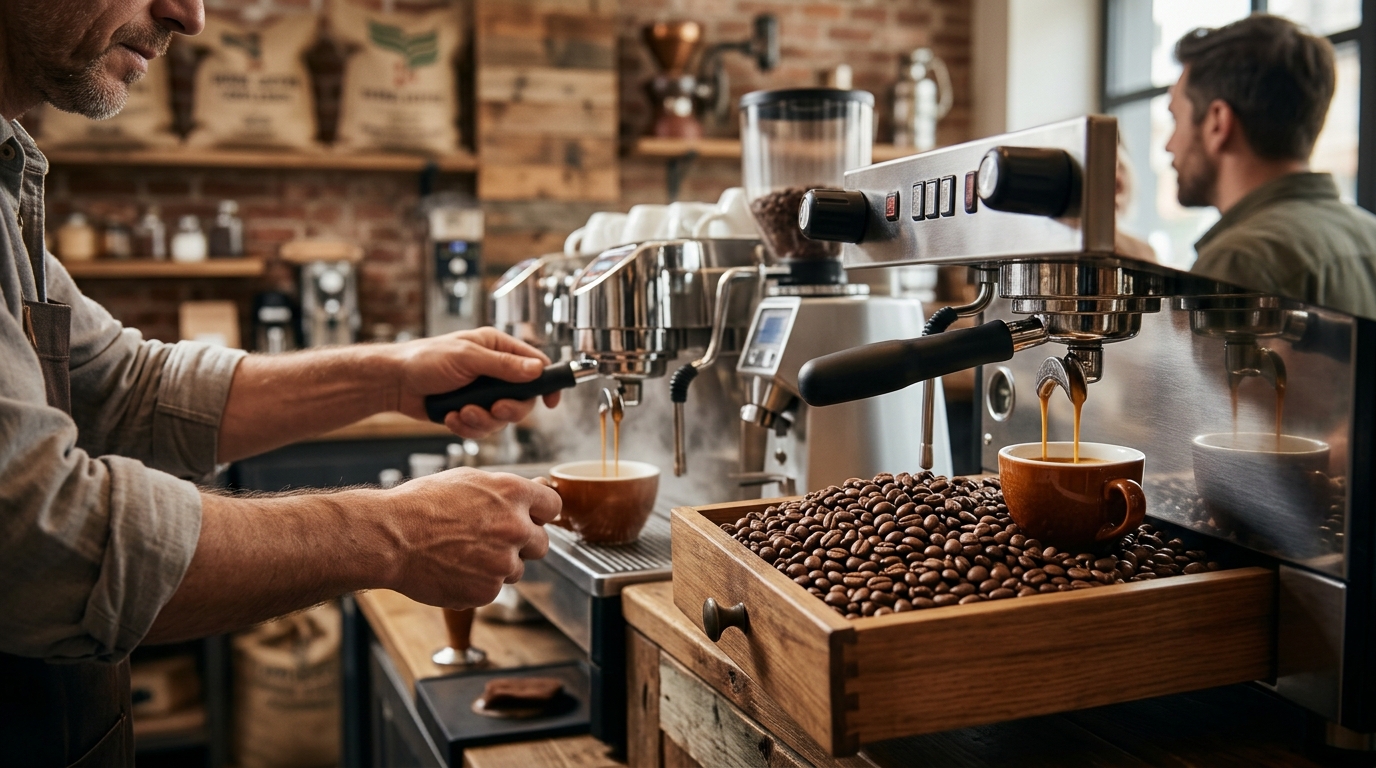
At Harlo Coffee Roasters, we believe the perfect espresso shot begins with the bean. Ideal espresso beans feature a medium roast profile, high density, and a balanced acidity that supports sweetness. These characteristics allow the water to extract complex flavors without pulling out harsh bitterness. Understanding these traits helps you choose the right coffee for your machine.
The Role of Roast Level in Extraction
Roast level is the most visible factor in espresso quality. A medium roast is often the sweet spot for espresso because it preserves the bean's natural sugars while developing the body needed for a rich shot. Light roasts can sometimes taste sour or under-extracted if the machine is not dialed in perfectly. Dark roasts, on the other hand, can mask the origin's flavor with heavy, ashy notes.
At Harlo, we roast our Indonesia Single Origin as a medium roast specifically for espresso. This approach ensures the coffee remains rich and syrupy without becoming burnt. The goal is to create a bean that is forgiving to brew while still delivering distinct flavor notes.
Bean Density and Moisture Content
Bean density is a critical but often overlooked metric. Dense beans hold their structure better during the high-pressure extraction of espresso. This stability helps create a consistent flow rate, which is essential for a balanced shot. Low-density beans can break down too quickly, leading to channeling and uneven extraction.
Processing methods also influence density. For example, the wet-hulling process used in Indonesia creates beans with a heavier body and softer acidity. This specific trait makes them exceptional for espresso because they produce a thick, creamy texture. Understanding how processing affects density helps you predict how a bean will behave in your portafilter.
Balancing Acidity and Sweetness
Acidity is not a flaw; it is a flavor component. In espresso, acidity provides brightness and lift. However, it must be balanced with sweetness to avoid a sharp or sour taste. A well-balanced espresso shot has a round mouthfeel where the acidity feels vibrant rather than harsh. This balance is achieved through careful roasting and the selection of high-quality Arabica beans.
Our Colombian Single Origin offers a bright, fruit-forward character that works well in espresso. The washed process preserves a clean cup, allowing notes of peach and cherry to shine through. When you taste a shot, you are evaluating how well the acidity and sweetness interact. A perfect shot feels smooth, not jagged.
Freshness and Degassing
Freshness is the engine of espresso flavor. Coffee beans release carbon dioxide after roasting, a process known as degassing. If you brew espresso too soon after roasting, the trapped gas can interfere with the extraction, causing the shot to spit or flow unevenly. Conversely, stale beans lack the volatile compounds that create aroma and flavor.
Harlo Coffee Roasters roasts in small batches in Los Angeles to ensure peak freshness. We recommend waiting a few days after the roast date before pulling espresso. This allows the beans to stabilize while retaining their aromatic complexity. Freshness is not just about taste; it is about the physical behavior of the bean under pressure.
Grind Size and Particle Distribution
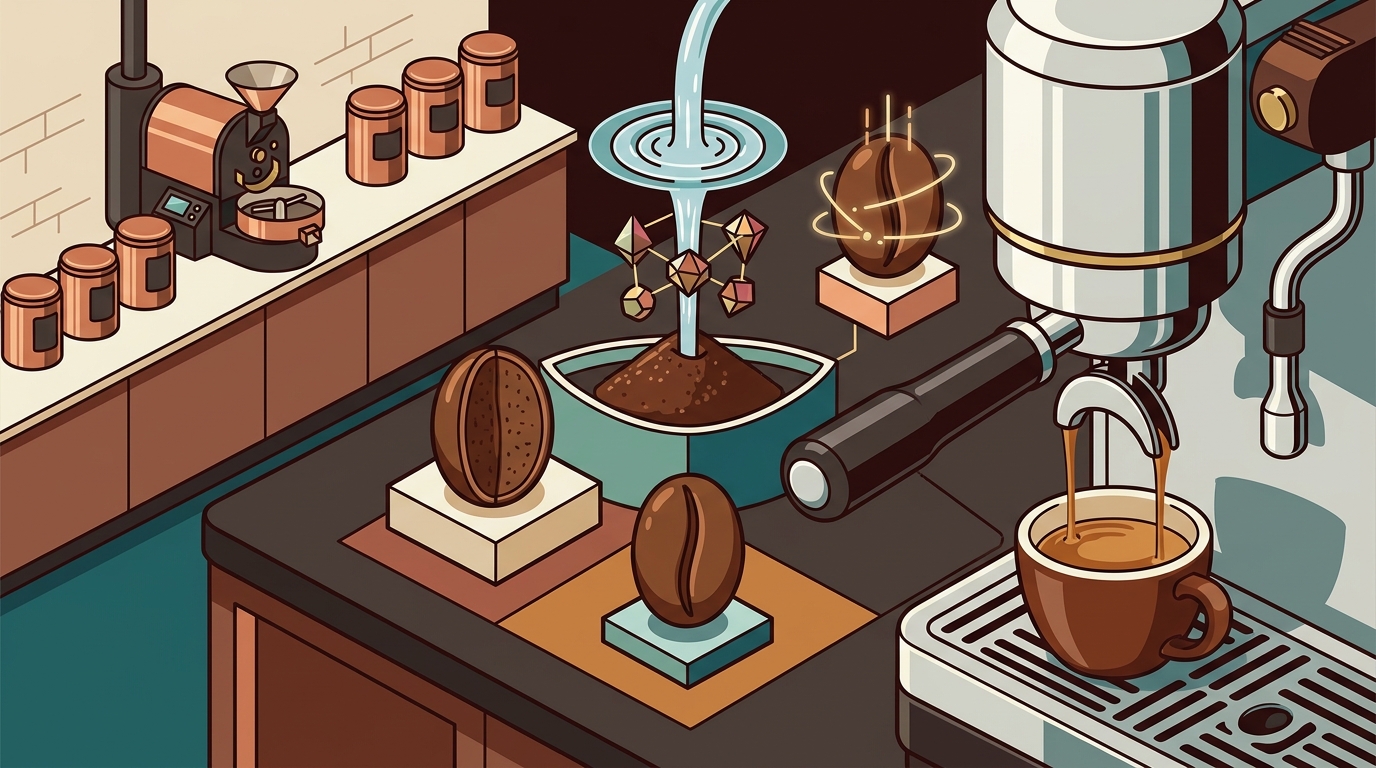
While the bean is the foundation, the grind is the interface. Espresso requires a fine grind to create enough resistance for the water to extract flavor under pressure. However, the particle distribution matters as much as the average size. A uniform grind ensures that water flows evenly through the puck. If the grind is inconsistent, water will find paths of least resistance, leading to under-extraction in some areas and over-extraction in others.
Key Takeaways
- Medium roasts are generally ideal for espresso as they balance sweetness and body.
- High bean density contributes to a stable extraction and creamy texture.
- Acidity should be vibrant but balanced with sweetness to avoid sourness.
- Freshness is critical; allow beans to degas for a few days after roasting.
- Uniform grind size is essential for preventing channeling and uneven extraction.
- Processing methods like wet-hulling can enhance body and reduce harsh acidity.
Frequently Asked Questions
What is the best roast level for espresso?
A medium roast is typically the best starting point for espresso. It preserves the bean's natural flavors while developing the body needed for a rich shot. Light roasts can be used but require precise dialing in, while dark roasts can mask origin characteristics.
Why do some espresso shots taste sour?
Sourness is usually a sign of under-extraction. This can happen if the grind is too coarse, the water is too cool, or the shot time is too short. Adjusting the grind finer or increasing the brew time can help pull out more sweetness and balance.
How fresh should my espresso beans be?
Espresso beans should be roasted within the last two to four weeks for optimal flavor. However, they need a few days to degas after roasting. Brewing immediately after roasting can cause the shot to spit or flow unevenly due to trapped carbon dioxide.
Does bean density affect espresso quality?
Yes, bean density affects how the coffee holds up under pressure. Denser beans tend to create a more stable extraction and a thicker body. This is why certain processing methods, like wet-hulling, are popular for espresso blends.
Can I use light roast coffee for espresso?
Yes, light roast coffee can be used for espresso. It produces a brighter, more tea-like cup with higher acidity. However, it is less forgiving than medium roasts and requires careful attention to grind size and water temperature to avoid sourness.
Start Your Espresso Journey
Choosing the right bean is the first step toward a perfect espresso shot. By focusing on roast level, density, acidity, and freshness, you can dial in a cup that is balanced and flavorful. At Harlo Coffee Roasters, we craft our coffees with these principles in mind. Explore our specialty coffee collection to find the perfect bean for your morning ritual.