
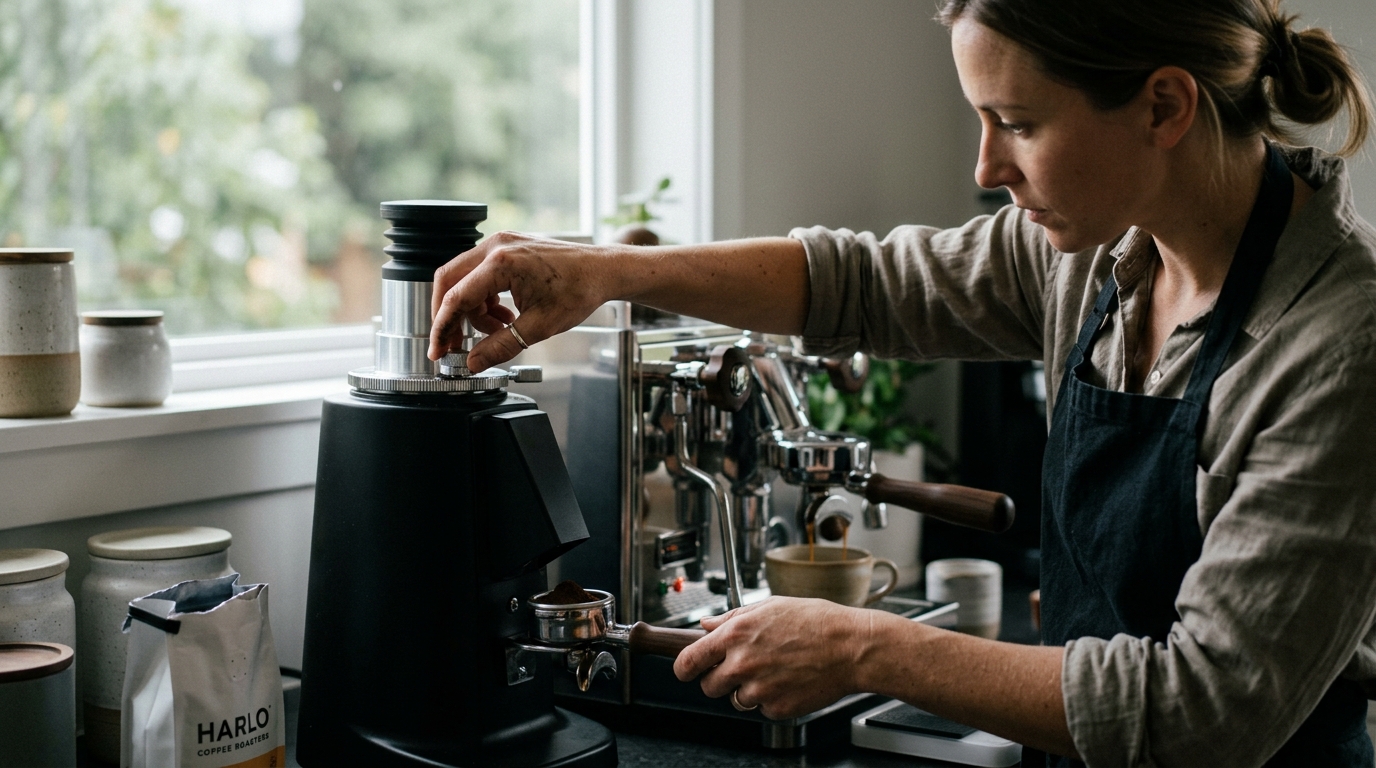
Espresso is the foundation of nearly every coffee shop drink, yet it remains the most misunderstood brewing method for home baristas. According to industry data, the average extraction yield for a well-pulled shot should sit between 18% and 22%, a narrow window that separates a sour, weak cup from a rich, balanced one. Getting this right requires understanding the interplay between grind size, dose, yield, and time. This guide breaks down the science and technique needed to master espresso at home, using principles that align with the specialty coffee standards upheld by roasters like Harlo Coffee Roasters.
Understanding Espresso: The Basics
Espresso is not a type of bean. It is a brewing method that forces hot water through finely ground coffee at high pressure. This process creates a concentrated beverage topped with crema, a golden-brown foam that indicates freshness and proper extraction. The term "espresso" comes from the Italian word for "expressed" or "pressed out," highlighting the mechanical nature of the brew.
Many beginners confuse espresso with dark roast coffee. While traditional Italian espresso often uses dark roasts, modern specialty coffee embraces lighter roasts to highlight the bean's origin characteristics. As noted in recent coffee industry reports, the shift toward lighter roasts has changed how baristas approach dialing in shots, requiring more precision in grind and temperature. You can explore the difference between specialty coffee and standard commercial blends in our detailed blog post on specialty coffee.
The Critical Role of Grind Size
Grind size is the most important variable in espresso preparation. Unlike pour-over coffee, which uses a medium grind, espresso requires a fine, powder-like consistency. The finer the grind, the more surface area is exposed to water, increasing the rate of extraction.
If your grind is too coarse, water flows through too quickly, resulting in under-extraction. This leads to a sour, acidic taste. If your grind is too fine, water struggles to pass through, causing over-extraction. This results in a bitter, astringent, and dry mouthfeel. Finding the "sweet spot" is what baristas call "dialing in."
Investing in a high-quality burr grinder is non-negotiable for espresso. Blade grinders create uneven particles, leading to inconsistent extraction. A conical or flat burr grinder ensures uniform particle size, which is essential for a balanced shot. For more tips on grinding, check out our comprehensive grind guide.
Dose and Yield: The Golden Ratio
Dose refers to the amount of dry coffee grounds placed in the portafilter basket. Yield refers to the weight of the liquid espresso that comes out of the machine. The ratio between these two numbers determines the strength and intensity of your coffee.
Traditional Italian espresso often used a 1:2 ratio, such as 14 grams of coffee yielding 28 grams of liquid. Modern specialty coffee often pushes this to a 1:2.5 ratio, such as 18 grams in, 45 grams out. This longer yield extracts more sweetness and complexity from the bean. According to data from the Specialty Coffee Association, the standard double shot has evolved to accommodate lighter roasts and higher extraction yields.
| Style | Dose (In) | Yield (Out) | Ratio | Flavor Profile |
|---|---|---|---|---|
| Traditional Ristretto | 18g | 27g | 1:1.5 | Intense, sweet, concentrated |
| Standard Double | 18g | 36g | 1:2 | Balanced, classic |
| Long Pour | 18g | 54g | 1:3 | Tea-like, complex, bright |
Understanding these ratios helps you adjust your recipe based on the bean. Lighter roasts are denser and harder to extract, so they often benefit from a higher yield to unlock their fruity and floral notes. Darker roasts are more soluble and can become bitter if pulled too long. You can find our curated coffee blends that are specifically roasted for espresso preparation.
Brew Time and Extraction
Brew time is the duration from when the pump starts until you stop the shot. For a standard double shot, the target time is typically between 25 and 30 seconds. This includes the "pre-infusion" phase if your machine supports it, where low-pressure water saturates the puck before full pressure is applied.
Extraction is the process of dissolving soluble compounds from the coffee grounds. The first compounds to dissolve are acids, followed by sugars, and finally bitter compounds. If you stop the shot too early, you get only the acids (sour). If you go too long, you get the bitter compounds (bitter). The goal is to capture the sugars in the middle for a sweet, balanced cup.
Temperature also plays a role. Higher temperatures (around 205°F to 210°F) increase extraction speed, which is useful for dense, light roasts. Lower temperatures can help reduce bitterness in darker roasts. However, grind size should always be your primary adjustment tool, not temperature.
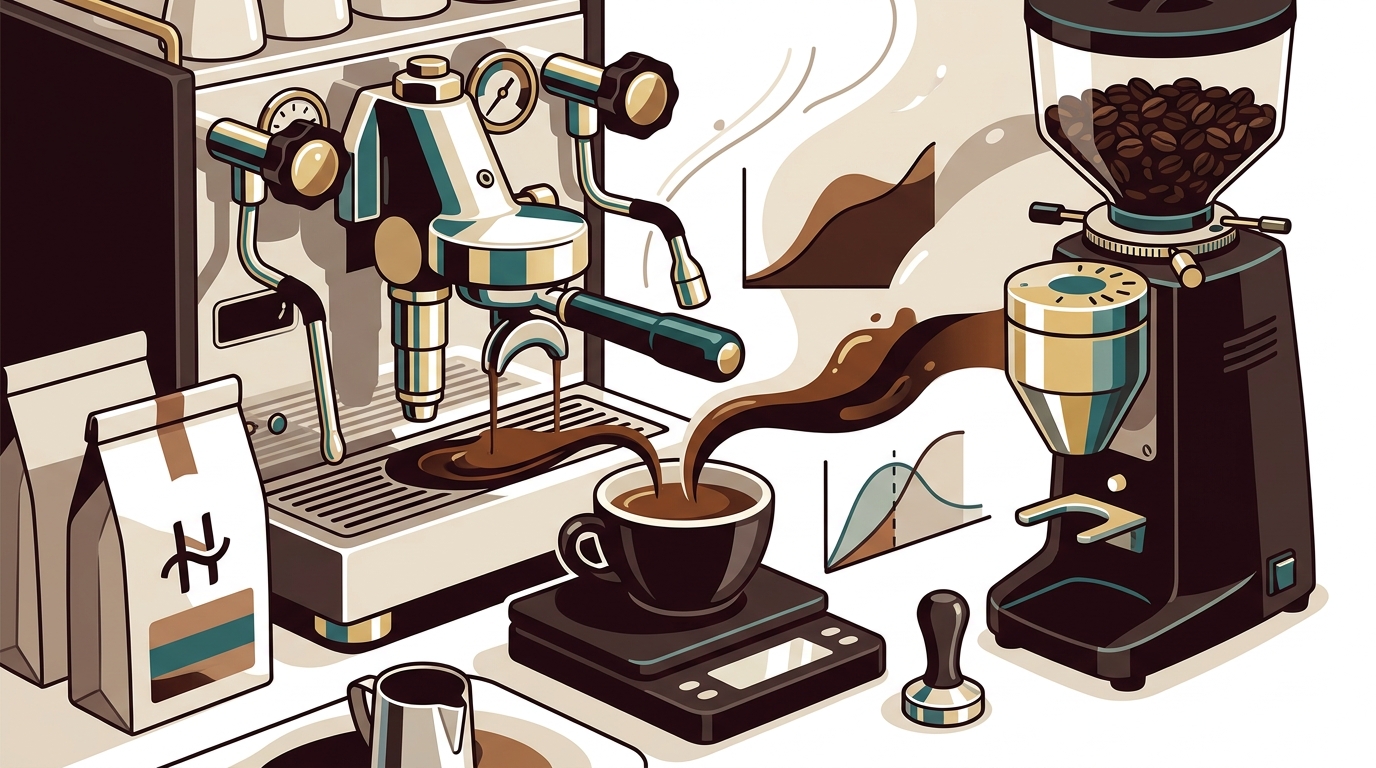
Troubleshooting Sour and Bitter Shots
Even with the best equipment, mistakes happen. Here is how to diagnose common espresso issues:
Sour Espresso
If your espresso tastes sharp, acidic, or like unripe fruit, it is under-extracted. This is usually caused by a grind that is too coarse, a dose that is too low, or a brew time that is too short. To fix this, make your grind finer, increase your dose, or allow the shot to run longer. For a deeper dive into fixing sour espresso, read our guide on correcting sour espresso.
Bitter Espresso
If your espresso tastes dry, astringent, or like burnt wood, it is over-extracted. This is usually caused by a grind that is too fine, a dose that is too high, or a brew time that is too long. To fix this, make your grind coarser, decrease your dose, or stop the shot earlier. Chain coffee shops often roast so dark that bitterness is masked, but in specialty coffee, bitterness is a sign of imbalance. Learn more about why chain coffee tastes burnt in our latest article.
Selecting the Right Beans
The bean you choose dictates your starting point. Espresso beans are not inherently different from filter beans, but they are often roasted differently to suit the brewing method.
Blends: Traditional espresso blends combine beans from different regions to create a balanced flavor profile. They often include a base of Brazilian or Colombian beans for body and sweetness, topped with an African bean for acidity and aroma. Blends are forgiving and consistent, making them great for daily drinking.
Single Origin: Single origin espresso highlights the unique terroir of one farm or region. Ethiopian single origins might offer notes of blueberry and jasmine, while Indonesian origins might offer earthy and spicy notes. Single origins require more precise dialing in but offer a unique tasting experience. Explore our single origin collection to find your next favorite bean.
Freshness is critical. Coffee begins to stale immediately after roasting. For espresso, the ideal window is typically 7 to 21 days post-roast. Before 7 days, the coffee may be too gassy, causing channeling and uneven extraction. After 21 days, the flavors begin to flatten. Always check the roast date on your bag.
Key Takeaways
- Grind Size is King: Adjust grind size before changing dose or time. It is the most sensitive variable.
- Target Ratio: Aim for a 1:2 to 1:2.5 ratio (e.g., 18g in, 36-45g out) for balanced extraction.
- Brew Time: Keep your shot between 25 and 30 seconds for optimal flavor development.
- Bean Freshness: Use beans roasted within the last 7 to 21 days for the best crema and flavor.
- Quality Grinder: A burr grinder is essential for uniform particle size and consistent extraction.
- Taste First: Use your palate to diagnose issues. Sour means under-extracted; bitter means over-extracted.
- Pre-Infusion: If your machine has it, use pre-infusion to saturate the puck evenly and reduce channeling.
Frequently Asked Questions
What is the best grind size for espresso?
The best grind size for espresso is fine, resembling table salt or powdered sugar. It should feel smooth but not dusty. The exact setting depends on your grinder, so use it as a starting point and adjust based on taste.
How long should an espresso shot take?
A standard double shot should take between 25 and 30 seconds from the moment the pump starts. This includes pre-infusion if applicable. Time your shot with a scale and timer for accuracy.
Can I use any coffee for espresso?
Yes, you can use any coffee for espresso, but it must be ground finely. However, beans roasted for espresso are often optimized for the high-pressure method, offering better balance and crema. Single origin beans can also make excellent espresso if dialed in correctly.
Why is my espresso sour?
Sour espresso is usually caused by under-extraction. This can happen if the grind is too coarse, the water temperature is too low, or the shot is pulled too quickly. Try making your grind finer or increasing your yield to fix this.
Why is my espresso bitter?
Bitter espresso is usually caused by over-extraction. This happens when the grind is too fine, the shot runs too long, or the water temperature is too high. Try making your grind coarser or stopping the shot earlier.
What is crema?
Crema is the golden-brown foam that sits on top of a fresh espresso shot. It is created by the emulsification of coffee oils and carbon dioxide under high pressure. A thick, persistent crema indicates fresh beans and proper extraction.
How do I store espresso beans?
Store espresso beans in an airtight container away from light, heat, and moisture. Do not refrigerate or freeze beans unless you are storing them for long periods in a truly airtight environment. For daily use, a opaque, airtight canister in a cool cupboard is best.
Start Your Espresso Journey
Mastering espresso is a rewarding process that transforms your morning routine. By understanding the science of extraction and using high-quality beans, you can create café-quality drinks at home. Whether you prefer a bold Mediterranean blend or a bright single origin, the right beans make all the difference. Explore our best-selling coffee collection and start dialing in your perfect shot today. Join our community for exclusive brew tips and subscriber-only offers by visiting our subscription page.