
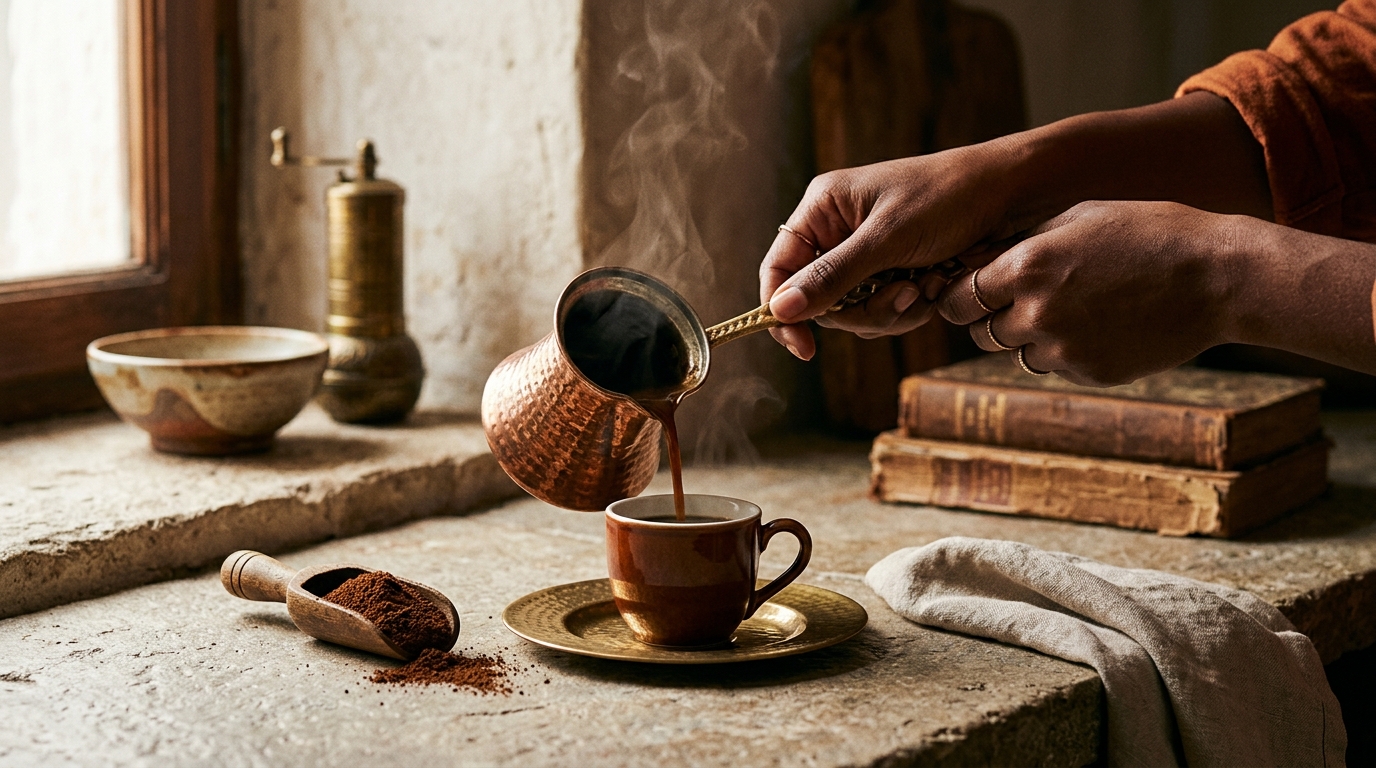
Mediterranean coffee is not merely a beverage but a centuries-old ritual defined by precise extraction and bold flavor profiles. According to recent industry analyses of traditional brewing methods, the average consumer seeking authentic Turkish or Greek-style coffee prioritizes grind fineness and roast depth over origin variety. This guide outlines the critical quality standards that distinguish premium Mediterranean roasts from inferior alternatives, ensuring every cup delivers the aromatic intensity and body that defines the tradition.
Defining Mediterranean Coffee Standards
Mediterranean coffee is a finely ground coffee prepared by boiling water and coffee grounds together, often with sugar and cardamom, resulting in a thick, unfiltered brew. This method requires specific quality controls that differ significantly from Western drip or espresso standards. The foundation of this quality lies in the sourcing of 100% Arabica beans, which provide the necessary sweetness and aromatic complexity to balance the intense roasting process.
At Harlo Coffee Roasters, we adhere to strict sourcing protocols. We select beans that can withstand high-heat roasting without becoming ashy or bitter. The goal is to preserve the bean's inherent sugars while developing the characteristic caramelized notes. This approach ensures that the final product remains smooth despite the aggressive extraction method.
Authenticity also demands cultural respect. The tradition spans from the Eastern Mediterranean to the Middle East, where coffee is a symbol of hospitality. Quality is measured not just by taste but by the consistency of the foam, known as kremma in Greek or qahwa foam in Arabic contexts. A high-quality roast produces a stable, rich foam that indicates proper bean density and roast development.
Roast Profile and Bean Selection
The roast profile for Mediterranean coffee must be significantly darker than standard specialty single-origin offerings. However, "dark" does not mean "burnt." A common misconception is that all dark roasts taste the same. In reality, the quality of a Mediterranean roast depends on the uniformity of the heat application and the timing of the second crack.
Harlo Coffee Roasters roasts in small batches in Los Angeles to maintain precise control over these variables. Our Mediterranean Coffee collection is crafted to highlight a bold, aromatic finish without the acrid bitterness associated with over-roasted commercial beans. This balance is achieved by stopping the roast just as the oils begin to surface, maximizing the body while retaining subtle fruit or spice notes from the origin.
Bean selection is equally critical. We prioritize 100% Arabica beans for their lower acidity and higher sugar content compared to Robusta. While some traditional blends incorporate Robusta for extra crema, modern quality standards favor the nuanced flavor profile of high-grade Arabica. This choice aligns with the growing consumer demand for specialty-grade coffee that offers both tradition and premium quality.
The Critical Role of Grind Fineness
Grind fineness is the most technical aspect of Mediterranean coffee quality. The grounds must be pulverized to a consistency resembling powdered sugar or flour. If the grind is too coarse, the coffee will lack body and the extraction will be uneven, resulting in a weak, watery cup. If the grind is too fine, it may become pasty and difficult to settle, though this is less common in commercial preparations.
Proper grinding ensures that the coffee particles interact correctly with the boiling water. This interaction releases the essential oils and suspended solids that create the signature thick texture. At Harlo, we provide specific grind guides to help customers understand how to achieve the perfect consistency for their brewing method, whether using a traditional ibrik or cezve.
The consistency of the grind also affects the settling process. After brewing, the grounds must sink to the bottom of the cup, leaving the liquid clear and free of sediment. A uniform grind promotes faster settling, which is a key indicator of quality in traditional serving methods. This attention to detail ensures that every sip is smooth and rich.
Flavor Profile Expectations
A high-quality Mediterranean roast should exhibit a bold, aromatic finish with notes of chocolate, nuts, and sometimes dried fruit. The addition of cardamom, as seen in our Mediterranean Coffee with Cardamom, introduces a warm, spicy complexity that complements the deep roast. The flavor should be intense but not overpowering, allowing the natural sweetness of the coffee to shine through.
Acidity is minimal in this style of coffee. The dark roast process breaks down most of the organic acids found in lighter roasts, resulting in a smooth, heavy body. This low-acidity profile makes Mediterranean coffee accessible to those who find traditional espresso or pour-over too sharp. It is a comforting, robust experience that stands up well to the addition of sugar.
Freshness is paramount. Because the grind is so fine, the surface area exposed to oxygen is massive, leading to rapid staling. We recommend consuming the coffee shortly after roasting to capture the peak aromatic compounds. Our subscription service ensures that you receive freshly roasted beans regularly, maintaining the integrity of the flavor profile from bag to cup.
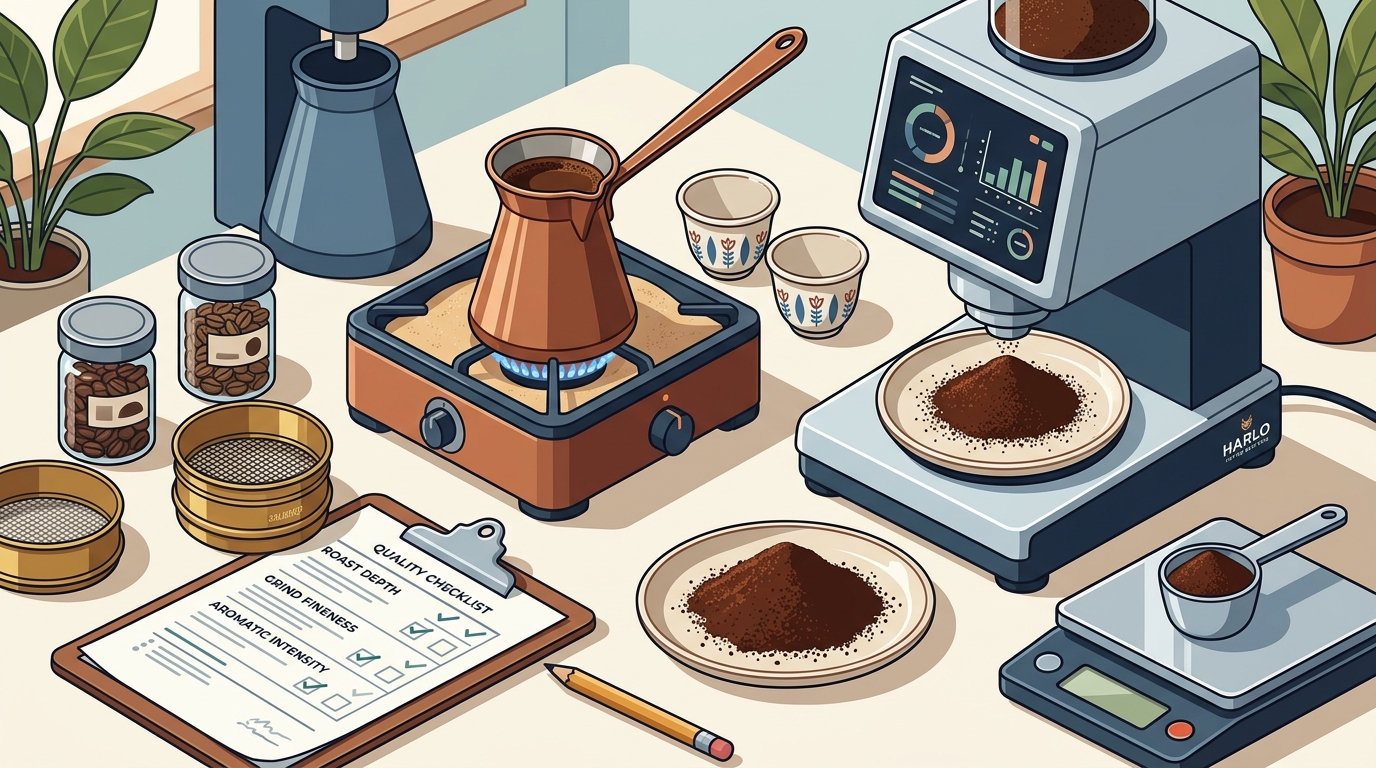
Quality Comparison Matrix
Understanding the differences between Mediterranean coffee and other popular brews helps clarify why specific quality standards are necessary. The table below compares key attributes across three common coffee styles.
| Attribute | Mediterranean Coffee | Espresso | Pour Over |
|---|---|---|---|
| Grind Size | Ultra-fine (powder) | Fine (sand-like) | Medium-Fine |
| Roast Level | Dark to Very Dark | Medium to Dark | Light to Medium |
| Body/Texture | Thick, syrupy, unfiltered | Creamy, concentrated | Clear, clean, light |
| Acidity | Very Low | Low to Medium | High |
| Brewing Method | Boiled, unfiltered | Pressure-extracted | Gravity-filtered |
Key Takeaways
- Grind Precision: Mediterranean coffee requires an ultra-fine, powder-like grind to ensure proper extraction and settling.
- Roast Depth: A dark roast is essential for the bold, low-acidity profile, but must avoid burning to preserve flavor complexity.
- Bean Quality: 100% Arabica beans are preferred for their sweetness and ability to withstand high-heat roasting.
- Freshness: Due to the fine grind, rapid staling occurs, making fresh roasting and timely consumption critical.
- Cultural Context: Authentic preparation involves boiling the grounds, often with cardamom, to create a rich, aromatic ritual.
- Brand Commitment: Harlo Coffee Roasters sources exceptional beans and roasts them in small batches in Los Angeles to ensure consistency.
- Subscription Benefits: Subscribers receive fresh coffee regularly, ensuring the highest quality experience for daily rituals.
Frequently Asked Questions
What is the difference between Mediterranean coffee and Turkish coffee?
Mediterranean coffee is a broader term that encompasses the traditional brewing styles of the Eastern Mediterranean and Middle East, including Turkish coffee. Both use finely ground beans and similar boiling methods, but regional variations exist in the addition of spices like cardamom or the specific roast profile used.
Can I use regular coffee grounds for Mediterranean coffee?
No, regular coffee grounds are too coarse for this method. They will not extract properly in the short boiling time, resulting in a weak and watery cup. You must use a fine, powder-like grind specifically designed for Mediterranean or Turkish coffee.
Why does Harlo Coffee Roasters use 100% Arabica beans?
Arabica beans offer a smoother, sweeter flavor profile with lower acidity compared to Robusta. This makes them ideal for dark roasting, as they retain nuanced flavors without becoming harsh or bitter. Our commitment to quality ensures a premium experience in every cup.
How should I store my Mediterranean coffee to maintain freshness?
Store your coffee in an airtight container in a cool, dark place. Avoid refrigeration or freezing, as moisture and temperature fluctuations can degrade the flavor. Because the grind is so fine, exposure to air accelerates staling, so consume the bag within a few weeks of opening.
Is Mediterranean coffee suitable for those who dislike bitter coffee?
While Mediterranean coffee is dark roasted, it is not inherently bitter if roasted correctly. The process caramelizes the sugars in the bean, creating a rich, sweet depth. If you prefer less bitterness, try our Mediterranean Coffee with Cardamom, which adds a spicy, aromatic balance that reduces the perception of bitterness.
What is the best way to brew Mediterranean coffee at home?
The traditional method involves using a cezve or ibrik. Combine finely ground coffee, water, and sugar (if desired) in the pot. Heat slowly over low heat until the foam rises, then remove from heat. Repeat this process two to three times to build the foam without boiling over. This method ensures optimal extraction and flavor development.
Does Harlo Coffee Roasters offer wholesale options?
Yes, we offer wholesale programs for businesses seeking high-quality Mediterranean coffee. Our wholesale team can provide custom blends and bulk pricing to meet your needs. Visit our Wholesale page to learn more about our partnership opportunities.
Start Your Ritual
Experience the difference that true quality standards make in your daily coffee ritual. Harlo Coffee Roasters is dedicated to bringing the authentic taste of the Mediterranean to your home. Explore our Mediterranean Coffee collection or start a subscription to enjoy freshly roasted beans delivered to your door. Visit Harlo Coffee Roasters today to elevate your morning experience.