
Essential Bean Characteristics for Espresso and Pour Over Success
The global coffee industry generates over $400 billion annually, yet the difference between a mediocre morning cup and a transformative experience often comes down to a single variable: the bean itself. According to market data, consumer preference is shifting rapidly toward specialty-grade beans that offer distinct flavor profiles rather than generic roast flavors. At Harlo Coffee Roasters, we believe that understanding the anatomy of the green bean is the first step to mastering your brew. Whether you are pulling a tight shot of espresso or pouring water over a bed of grounds, the bean's origin, processing, and roast level dictate the final outcome.
The Role of Origin and Terroir
Terroir is a concept borrowed from winemaking that describes how the environment where a coffee plant is grown affects the final flavor. Research in agronomy confirms that soil composition, altitude, and rainfall patterns are critical determinants of bean density and sugar development.
High-altitude coffees, such as those from Ethiopia or Colombia, grow slower due to cooler temperatures. This extended maturation period allows the bean to develop more complex sugars and acids. Our single origin collection highlights these nuances, offering beans that taste distinctly different from low-grown varieties. Low-altitude beans tend to be denser and less acidic, often providing a heavier body that some espresso drinkers prefer.
When selecting beans, consider the geographic region. African beans typically offer bright, fruity, and floral notes. South American beans often provide nutty, chocolatey, and balanced profiles. Asian or Pacific beans might offer earthy, spicy, or herbal characteristics. Understanding these regional tendencies helps you predict how a bean will behave during extraction.
Processing Methods and Flavor Clarity
How the coffee cherry is removed from the seed dramatically impacts the bean's internal structure and flavor potential. The three main methods are washed, natural, and honey processing.
Washed processing involves removing the fruit pulp immediately after harvest and fermenting the bean in water. This method produces a clean, bright cup with high clarity. Ethiopian single origin coffees are often washed to preserve their delicate floral and citrus notes. This clarity is ideal for pour over brewing, where you want to taste the specific nuances of the bean.
Natural processing involves drying the whole cherry in the sun. The fruit ferments against the bean, imparting heavy body and intense fruit flavors. These beans can be unpredictable but offer a wine-like complexity. Best selling blends often incorporate natural processed beans to add sweetness and body to the final cup.
Honey processing sits between the two. The mucilage (the sticky layer under the skin) is left on during drying. This results in a cup that is sweeter than washed but cleaner than natural. For espresso, honey processed beans can provide a luxurious mouthfeel that stands up well to milk.
Roast Dynamics for Extraction
Roasting is the chemical transformation that unlocks the flavor locked inside the green bean. The degree of roast affects the bean's density, acidity, and solubility.
Light roasts preserve the original character of the bean. They are denser and harder to extract, requiring precise water temperature and grind size. Our blog posts often discuss how light roasts reveal the terroir of the coffee. These beans are excellent for pour over because they highlight acidity and fruit notes.
Medium roasts balance acidity and body. They are the most versatile beans, suitable for both espresso and pour over. The sugars caramelize, creating a sweeter profile without masking the bean's origin characteristics.
Dark roasts break down more of the bean's structure, resulting in a lighter, more porous bean. This makes them easier to extract quickly, which is crucial for espresso. However, dark roasts often mask the origin flavors with smoky, bitter notes. Chain coffee shops often roast too dark, leading to a uniform but bland taste. Specialty roasters like Harlo avoid this pitfall by roasting to highlight the bean's potential.
Bean Characteristics for Espresso
Espresso is a high-pressure extraction method. Water is forced through finely ground coffee at 9 bars of pressure. This requires beans that can produce a stable crema and a balanced flavor under intense stress.
For espresso, you generally want beans that have undergone some aging or are roasted slightly darker. Freshly roasted beans release too much carbon dioxide, which can cause channeling and uneven extraction. Coffee blends are often designed specifically for espresso. They combine beans with different properties to create a balanced shot. For example, a Brazilian bean might add chocolatey body, while an Ethiopian bean adds brightness.
Bean density is also critical. Denser beans, often from high altitudes, can withstand the pressure without becoming overly acidic. However, if the bean is too dense, it may under-extract, leading to a sour shot. The key is finding a bean with enough density to hold structure but enough solubility to release sugars quickly.
Moisture content matters too. Beans that are too dry will produce a thin, watery crema. Beans with optimal moisture content create a thick, persistent crema that indicates a good extraction. Sour espresso is usually a sign of under-extraction, which can be fixed by adjusting the grind or using a bean with higher solubility.
Bean Characteristics for Pour Over
Pour over brewing is a gravity-fed method. Water passes through the grounds once, allowing for a cleaner cup. This method highlights the bean's acidity, aroma, and subtle flavor notes.
For pour over, light to medium roasts are ideal. These beans retain their unique origin characteristics. Single origin coffees shine in this method because you can taste the specific terroir. A washed Ethiopian Yirgacheffe, for example, will taste like jasmine and lemon. A natural processed Colombian will taste like strawberry and chocolate.
Bean structure plays a role here too. Lighter roasts are harder and more brittle. They need to be ground evenly to ensure consistent extraction. If the grind is too coarse, the water will pass through too quickly, resulting in a sour, weak cup. If the grind is too fine, the water will sit too long, resulting in a bitter, astringent cup.
Acidity is not a flaw in pour over. It is a desirable quality that adds brightness and complexity. Specialty coffee is defined by its complexity, which is often driven by acidity. When choosing beans for pour over, look for descriptions that mention "bright," "crisp," or "fruity." These indicate a bean that will perform well in a pour over brewer.
Espresso vs. Pour Over Bean Comparison
Understanding the differences between beans for espresso and pour over helps you make better purchasing decisions. The table below summarizes the key characteristics.
| Characteristic | Espresso Ideal Bean | Pour Over Ideal Bean |
|---|---|---|
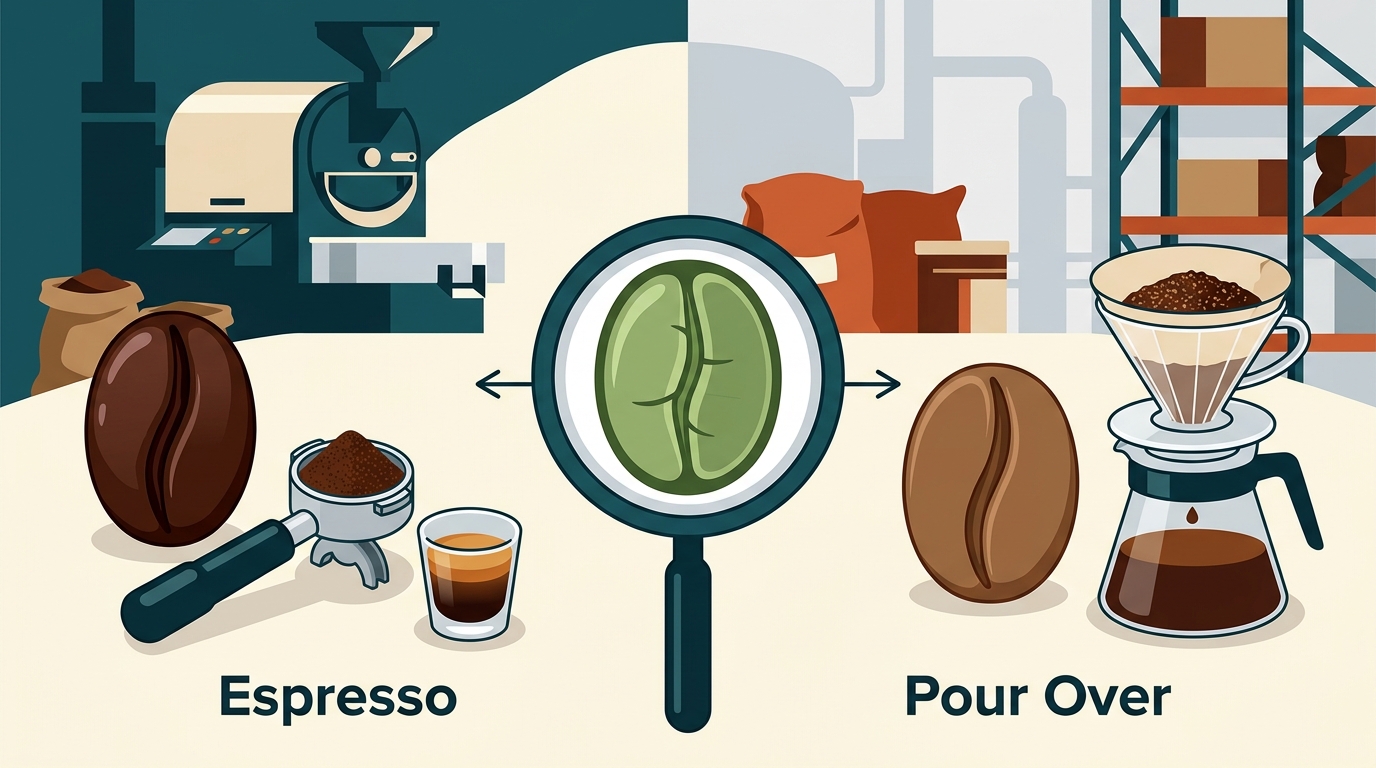
| Roast Level | Medium to Dark | Light to Medium |
| Processing | Natural or Honey (for body) | Washed (for clarity) |
| Origin Profile | Brazilian, Colombian (Nutty/Chocolate) | Ethiopian, Kenyan (Fruity/Floral) |
| Bean Density | High Density (for pressure resistance) | Variable (depends on altitude) |
| Flavor Focus | Body, Sweetness, Crema | Acidity, Aroma, Nuance |
| Blend vs. Single | Often Blended for balance | Often Single Origin for purity |
Key Takeaways
- Origin Matters: African beans offer fruit and acidity, while South American beans offer nut and chocolate notes.
- Processing Impacts Body: Natural processed beans have heavier body, while washed beans have higher clarity.
- Roast Level Dictates Extraction: Light roasts are harder to extract and highlight acidity, while dark roasts are easier to extract and highlight bitterness.
- Espresso Needs Density: Dense beans withstand high pressure and produce better crema.
- Pour Over Needs Clarity: Washed, light roasted beans highlight the unique terroir of the coffee.
- Blends Offer Balance: Espresso blends combine different beans to create a consistent and balanced shot.
- Freshness is Critical: Beans should be roasted to order to ensure peak flavor and aroma.
Frequently Asked Questions
Can I use the same beans for espresso and pour over?
Yes, you can use the same beans for both methods, but the results will vary. A medium roast single origin can work for both, but you will need to adjust your grind size and brewing technique. Espresso requires a finer grind and higher pressure, while pour over uses a coarser grind and gravity.
Why do espresso beans often taste different from pour over beans?
Espresso beans are often roasted darker to reduce acidity and increase solubility, making them easier to extract under pressure. Pour over beans are often roasted lighter to preserve delicate flavors and acidity. This difference in roast level creates a distinct flavor profile for each method.
What is the best grind size for espresso?
Espresso requires a fine grind, similar to table salt. The grind must be consistent to prevent channeling, where water finds a path of least resistance through the coffee puck. Proper grinding is essential for any brewing method to ensure even extraction.
How does altitude affect coffee flavor?
Higher altitude coffees grow slower and develop more complex sugars and acids. This results in a brighter, more acidic cup with floral and fruity notes. Lower altitude coffees grow faster and develop less acidity, resulting in a heavier body and nutty or chocolatey flavors.
What is the difference between washed and natural processed coffee?
Washed coffee is processed by removing the fruit pulp and fermenting the bean in water, resulting in a clean, bright cup. Natural coffee is dried with the fruit still attached, resulting in a heavier body and more intense fruit flavors.
Why is freshness important for espresso?
Freshly roasted beans release carbon dioxide, which helps create crema. However, beans that are too fresh can cause uneven extraction due to excessive gas. Beans that are too old lose their aroma and flavor. Single origin coffees are best enjoyed within a few weeks of roasting to capture their unique character.
Can I make espresso with a French press?
While you cannot make true espresso in a French press, you can make a strong, concentrated coffee that mimics some espresso characteristics. Use a fine grind and a longer steep time. However, the lack of pressure means you will not get crema or the same level of extraction.
Start Your Journey
Understanding bean characteristics is the key to unlocking the full potential of your coffee. Whether you prefer the bold intensity of espresso or the nuanced clarity of pour over, the right bean makes all the difference. Explore our specialty coffee collection at Harlo Coffee Roasters to find the perfect beans for your brewing style. We roast in small batches in Los Angeles to ensure freshness and quality. Subscribe to our service to have freshly roasted coffee delivered to your door every month.