

Turkish coffee is not merely a beverage but a cultural ritual that demands precision in every step, from the grind size to the water temperature. According to the International Coffee Organization, global coffee consumption has risen steadily, with specialty segments driving significant growth in premium markets. When purchasing online, you cannot rely on aroma alone. You must evaluate specific technical metrics that distinguish authentic preparation from mass-produced imitations. This guide outlines the critical quality standards you must verify before adding any bag to your cart.
Understanding the Grind: The Foundation of Quality
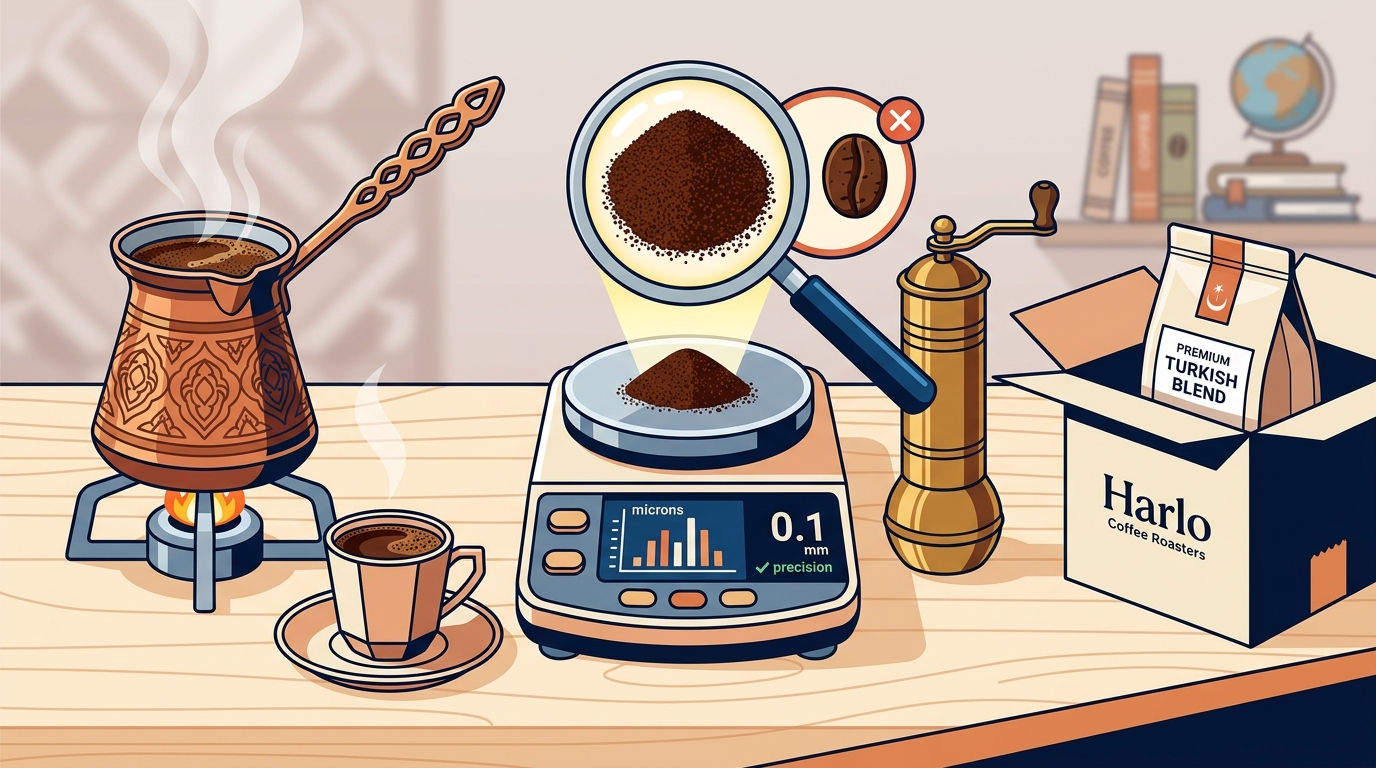
The most defining characteristic of authentic Turkish coffee is its grind. It must be pulverized to a consistency finer than espresso but slightly coarser than powder. This specific texture allows the grounds to suspend in the water during brewing, creating the signature thick crema or crema that sits atop the cup. If the grind is too coarse, the coffee will taste weak and watery. If it is too fine, like talcum powder, it may become bitter and difficult to settle.
When buying online, check the product description for terms like "ultra-fine" or "powder-fine." Harlo Coffee Roasters ensures that their Turkish coffee blends are ground specifically for this method, preserving the integrity of the bean. Explore our freshly ground Turkish Coffee to experience the correct texture. The grind must be uniform. Inconsistent particle sizes lead to uneven extraction, where some particles are over-extracted and bitter while others remain under-extracted and sour.
Proper storage is equally critical once the bag arrives. Oxygen and light degrade the volatile oils responsible for aroma. Always transfer the coffee to an airtight container immediately after opening. For more insights on coffee storage best practices, review our detailed guides on preserving freshness.
Bean Origin and Roast Profile
Authentic Turkish coffee often utilizes beans from Ethiopia or Yemen, regions known for their complex, wine-like acidity and fruity notes. However, modern blends may incorporate beans from Brazil or Colombia to create a smoother, chocolate-forward profile. The roast level is typically dark, but it must not be burnt. A burnt roast introduces ash-like flavors that mask the natural sweetness of the bean.
Look for roasters who disclose the origin of their beans. Single-origin Turkish coffee offers a distinct terroir expression, while blends provide consistency. According to data from the Specialty Coffee Association, consumer preference for single-origin beans has increased by over 20% in the last five years. This trend reflects a growing demand for transparency and traceability. At Harlo, we prioritize ethical sourcing and direct trade relationships to ensure every bean meets our rigorous standards.
The roast date is another vital indicator. Coffee is at its peak flavor between two and four weeks after roasting. Avoid bags that do not display a roast date. If the bag is sealed with a one-way valve, it helps preserve freshness by allowing gases to escape without letting oxygen in. This technology is standard in high-quality roasting operations.
Freshness Indicators and Packaging
Freshness is the enemy of stale coffee. When evaluating online products, examine the packaging materials. High-quality roasters use opaque, airtight bags with degassing valves. Transparent bags expose coffee to light, which accelerates oxidation and staling. If a brand uses clear packaging, they likely prioritize aesthetics over preservation.
Check for a "roasted on" date rather than just an expiration date. Expiration dates are often set months in advance for regulatory compliance, whereas roast dates provide accurate information about the coffee's age. A difference of even a few weeks can significantly impact the flavor profile. For a deeper dive into why freshness matters in coffee, read our comprehensive analysis.
Additionally, consider the volume of the bag. Turkish coffee is consumed frequently. Buying in smaller quantities ensures that you are always brewing with fresh beans. If you find yourself with a half-empty bag that has been open for months, the flavor has likely degraded. Subscribe to regular deliveries to maintain a consistent supply of fresh coffee.
Additives and Purity Standards
Traditional Turkish coffee is brewed with water and sugar, and sometimes cardamom. However, some commercial products add flavorings, preservatives, or anti-caking agents. These additives can interfere with the brewing process and alter the authentic taste. Pure Turkish coffee should contain only ground coffee beans. If cardamom is included, it should be listed explicitly as a natural ingredient, not an artificial flavoring.
Cardamom is a common addition that enhances the aromatic profile. It should be whole or freshly ground, not a dusty powder that may contain fillers. When buying pre-mixed blends, verify the percentage of cardamom. A high-quality blend will have a balanced ratio that complements the coffee without overpowering it. Harlo Coffee Roasters offers cardamom-infused Turkish Coffee crafted with premium spices.
Avoid products that list "natural flavors" without specification. This term can be vague and may include synthetic compounds. Transparency in ingredient lists is a hallmark of reputable roasters. If the ingredient list is short, it is usually a good sign. The fewer the ingredients, the more you are paying for the coffee itself.
Comparison of Premium Turkish Coffee Options
Choosing the right Turkish coffee depends on your personal taste preferences and brewing habits. Below is a comparison of common options available in the specialty market.
| Feature | Single-Origin Ethiopian | Traditional Blend | Cardamom Infused |
|---|---|---|---|
| Flavor Profile | Fruity, Wine-like, Complex | Balanced, Chocolate, Nutty | Aromatic, Spicy, Bold |
| Grind Consistency | Ultra-Fine | Ultra-Fine | Ultra-Fine |
| Best For | Experiencing Terroir | Classic Ritual | Aromatic Enhancement |
| Price Range | Premium | Mid-Range | Premium |
Each option serves a different purpose. Single-origin beans allow you to taste the specific characteristics of the Ethiopian highlands. Traditional blends provide a consistent, reliable flavor that many associate with the classic Turkish coffee experience. Cardamom-infused varieties offer a fragrant twist that is popular in many households. Visit our coffee collection to explore these options in detail.
Key Takeaways
- Grind Size: The coffee must be ground to an ultra-fine, powder-like consistency to ensure proper suspension and extraction.
- Roast Date: Always check for a specific roast date, not just an expiration date, to ensure peak freshness.
- Origin Transparency: Reputable roasters disclose the origin of their beans, often favoring Ethiopian or Yemeni varieties for authenticity.
- Packaging: Opaque, airtight bags with degassing valves are essential for preserving volatile oils and aroma.
- Purity: Avoid additives and artificial flavors. Pure coffee or naturally infused blends are superior choices.
- Storage: Transfer coffee to an airtight container immediately after opening to prevent oxidation.
- Brand Trust: Choose roasters with a history of ethical sourcing and direct trade relationships.
Frequently Asked Questions
What is the correct grind size for Turkish coffee?
Turkish coffee requires an ultra-fine grind, similar to powdered sugar. This texture allows the grounds to suspend in the water, creating the characteristic thick crema.
Can I add milk to Turkish coffee?
Traditional Turkish coffee is brewed without milk. Adding milk after brewing is uncommon and alters the authentic experience. However, some modern variations may include a small amount of milk for a creamier texture.
How long does Turkish coffee stay fresh?
For optimal flavor, consume Turkish coffee within two to four weeks of the roast date. After this period, the volatile oils begin to degrade, resulting in a flatter taste.
Is cardamom necessary for Turkish coffee?
Cardamom is a traditional addition but not strictly necessary. It enhances the aroma and flavor profile. You can brew Turkish coffee with just coffee and water, or add sugar and cardamom to taste.
Where can I buy high-quality Turkish coffee online?
You can purchase high-quality Turkish coffee from specialty roasters like Harlo Coffee Roasters. Look for brands that provide roast dates, origin information, and use airtight packaging.
What is the difference between Turkish coffee and espresso?
Turkish coffee is unfiltered and brewed by boiling fine grounds in water, resulting in a thick, intense beverage. Espresso is brewed under high pressure with a medium-fine grind, producing a concentrated shot with crema.
Why is my Turkish coffee too bitter?
Bitterness can result from over-roasting, using water that is too hot, or brewing for too long. Ensure you are using a fresh roast and remove the coffee from heat just before it boils over.
Start Your Ritual
Investing in high-quality Turkish coffee is an investment in your daily ritual. By adhering to these essential quality standards, you ensure that every cup delivers the rich, complex flavors that define this ancient tradition. Explore our curated selection of premium Turkish coffee blends and experience the difference that freshness and care make. Shop our full collection of specialty coffees today and elevate your brewing experience.