
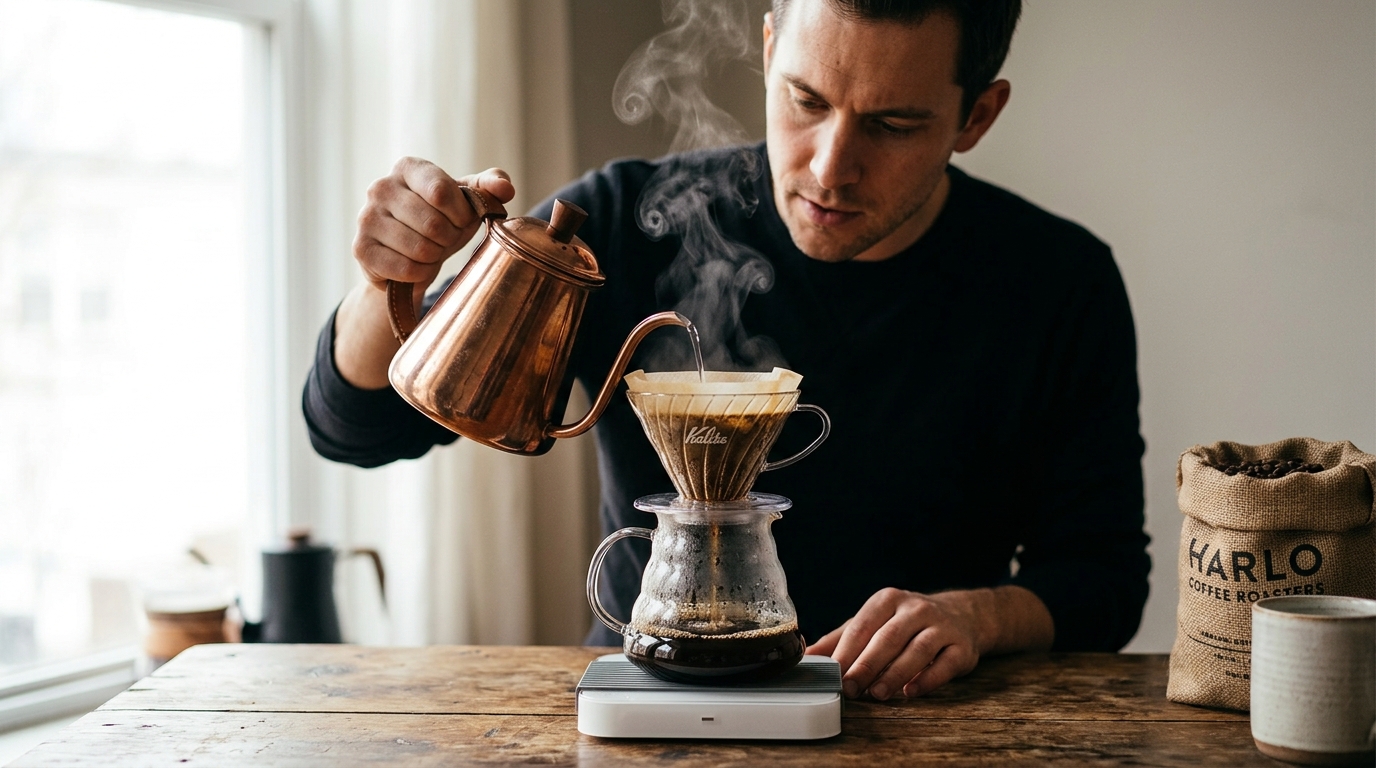
Freshly roasted beans taste better in pour over because they retain volatile aromatic compounds and structural integrity that degrade over time. As coffee ages, it loses carbon dioxide and develops staler, flatter flavors. Harlo Coffee Roasters roasts in small batches in Los Angeles to preserve the bright, complex notes that define a high-quality pour over cup.
The Chemistry of Freshness in Pour Over
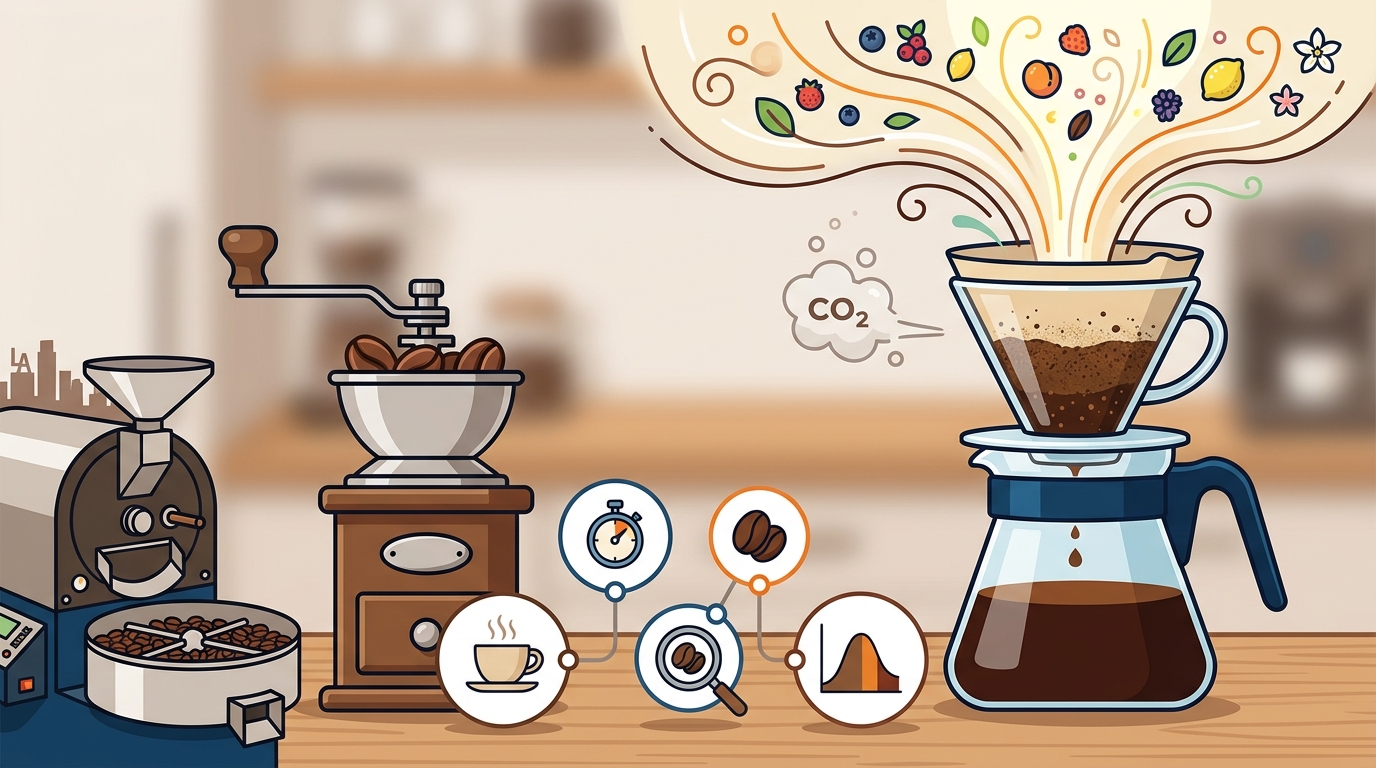
Freshness is the primary driver of flavor clarity in immersion and drip brewing. When coffee is roasted, it releases carbon dioxide (CO2) and develops hundreds of volatile aromatic compounds. These compounds are responsible for the floral, fruity, and citrus notes often found in specialty coffee. As the beans age, these volatiles escape into the air, a process known as degassing. Once the CO2 is gone, the coffee loses its structural support in the cup, leading to a flatter, less vibrant taste.
For pour over methods, which rely on a clean extraction, this loss of freshness is particularly noticeable. Stale beans often taste papery or dull because the delicate sugars and acids that create sweetness have oxidized. By using beans roasted within the last few days, you ensure that the aromatic profile remains intact. This allows the water to extract the full spectrum of flavors without the interference of stale, oxidized notes.
Grind Size and Fresh Bean Interaction
The interaction between grind size and bean freshness is critical for a balanced cup. Freshly roasted beans are often slightly more brittle due to the internal moisture changes that occur during roasting. This brittleness can affect how the grinder cuts the bean. If the beans are too fresh, they may produce more fines, which can lead to over-extraction and a bitter taste. Conversely, beans that are too old may be harder and less uniform, leading to under-extraction and a sour, thin cup.
Harlo Coffee Roasters provides a detailed coffee grind size guide to help you match your grind to your brewer. For pour over, a medium-fine grind, similar to sand, is typically ideal. This size allows for a balanced extraction time, usually between two and four minutes. When using fresh beans, it is helpful to start with a slightly coarser grind to account for the increased brittleness. This adjustment helps prevent channeling and ensures a smooth, sweet cup.
Optimal Brewing Ratios for Fresh Coffee
Using a consistent ratio is the foundation of a good pour over, but the ratio itself may need slight adjustment based on freshness. A standard starting point is a 1:16 ratio, meaning one part coffee to sixteen parts water. For example, if you use 20 grams of coffee, you should use 320 grams of water. Freshly roasted beans often extract more efficiently because their cell structure is more open. This can sometimes result in a cup that tastes slightly more intense or bitter if the ratio is not adjusted.
To find your sweet spot, you can experiment with ratios between 1:15 and 1:17. If the cup tastes too strong or bitter, increase the water slightly. If it tastes weak or sour, decrease the water. This fine-tuning is easier with fresh beans because the feedback is clearer. Stale beans can mask these nuances, making it harder to dial in your brew. By keeping your beans fresh, you gain a more responsive brewing experience that allows for precise control over the final flavor.
Water Quality and Temperature Control
Water is the largest component of your coffee, and its quality directly impacts the taste. Freshly roasted beans are more sensitive to water chemistry because they have more soluble compounds to extract. Using water that is too hard or too soft can throw off the balance of the cup. Ideally, you want water with a total dissolved solids (TDS) level between 75 and 150 ppm. This range provides enough minerals to extract sweetness without overwhelming the delicate flavors of the coffee.
Temperature is another key factor. Fresh beans generally brew best at slightly lower temperatures than older beans. A range of 195 to 205 degrees Fahrenheit is a good starting point. If the water is too hot, it can scorch the fresh, delicate compounds, leading to a bitter taste. If it is too cool, it may not extract enough of the sweetness. Using a gooseneck kettle allows for precise control over the pour, which is essential for pour over methods. This control helps you manage the extraction rate and ensures a consistent, high-quality cup.
Key Takeaways
- Freshly roasted beans retain volatile aromatics that create bright, complex flavors in pour over coffee.
- CO2 release and oxidation cause stale beans to taste flat, papery, or dull.
- Fresh beans are more brittle, which may require a slightly coarser grind to prevent over-extraction.
- A 1:16 coffee-to-water ratio is a reliable starting point for most pour over recipes.
- Water quality and temperature are critical for extracting the full potential of fresh coffee.
- Harlo Coffee Roasters roasts in small batches to ensure peak freshness for every order.
Frequently Asked Questions
How long after roasting is coffee best for pour over?
For pour over, coffee is typically at its peak flavor between three and ten days after roasting. This window allows the beans to degas sufficiently while retaining their aromatic compounds. Brewing too early can result in a gassy, bitter cup, while waiting too long leads to a flat, stale taste.
Does grind size matter more with fresh beans?
Yes, grind size is more critical with fresh beans because they are more brittle and produce more fines. A slightly coarser grind can help prevent over-extraction and ensure a smoother, sweeter cup. Always adjust your grind based on the taste of the final brew.
What is the ideal water temperature for fresh pour over coffee?
The ideal water temperature for fresh pour over coffee is between 195 and 205 degrees Fahrenheit. This range allows for efficient extraction of sweetness and acidity without scorching the delicate flavors. Adjust the temperature slightly based on the roast level and your personal preference.
Why does my pour over taste bitter with fresh beans?
Bitterness in fresh pour over coffee is often caused by over-extraction. This can happen if the grind is too fine, the water is too hot, or the brew time is too long. Try coarsening your grind or lowering the water temperature to achieve a more balanced cup.
Can I use fresh beans in an automatic drip machine?
Yes, you can use fresh beans in an automatic drip machine. However, the same principles apply. Fresh beans may require a slightly coarser grind to prevent over-extraction. The convenience of automatic drip does not negate the importance of freshness and proper grind size for a great cup.
Start Your Fresh Pour Over Journey
Experience the difference that freshness makes in your morning cup. Harlo Coffee Roasters offers a curated selection of single origin coffee beans and premium coffee blends roasted to order in Los Angeles. Whether you prefer the bright citrus notes of an Ethiopian or the rich body of a Colombian, our small-batch roasting ensures you receive coffee at its peak flavor. Visit our brew guides for more tips on dialing in your perfect pour over.