
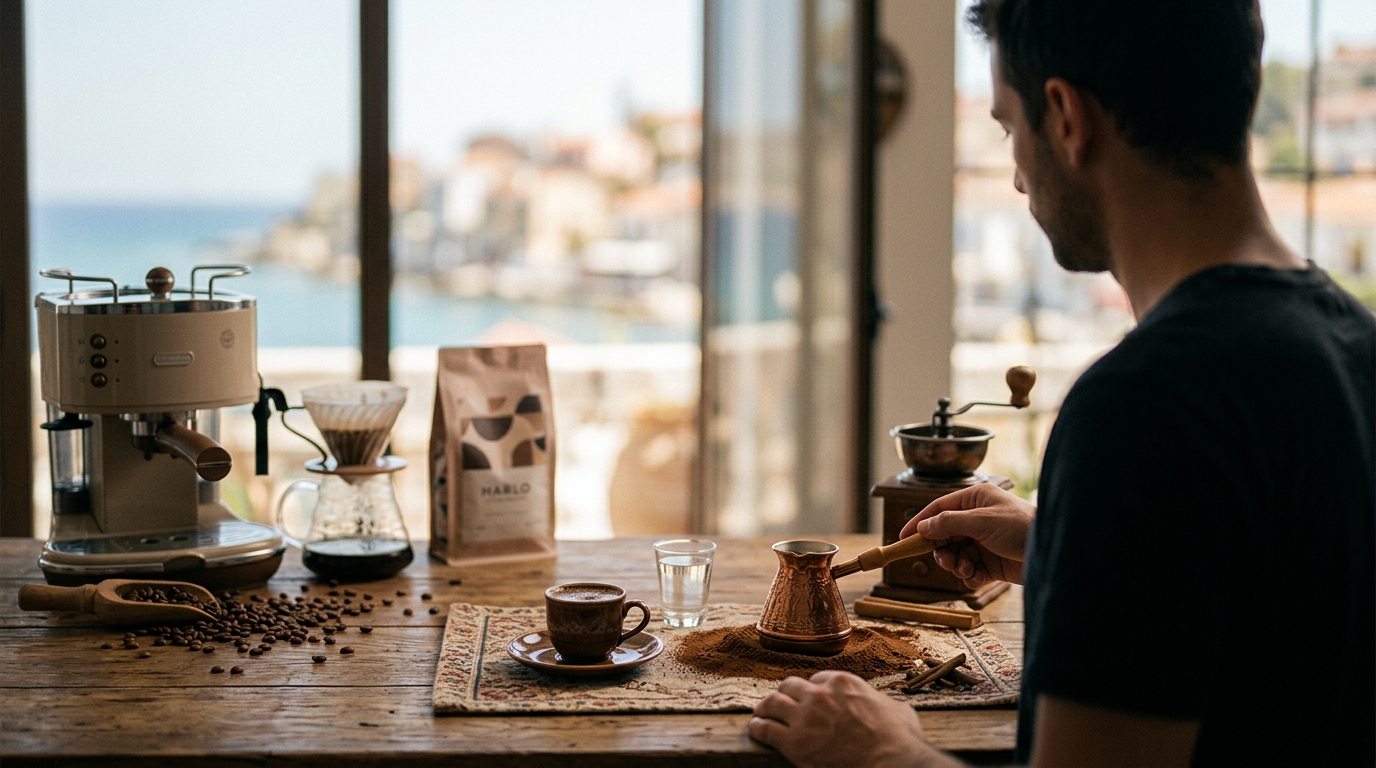
Coffee culture is not monolithic. While the global standard often defaults to filtered drip or espresso-based drinks, a significant portion of the world relies on a distinct, unfiltered brewing method that has defined mornings for centuries. Mediterranean coffee is a finely ground, boiled coffee tradition originating from the Eastern Mediterranean and Middle East, characterized by its thick texture and intense aromatic profile. This method stands in stark contrast to Western "traditional" coffee, which typically relies on filtration to separate grounds from liquid. Understanding these differences is essential for coffee enthusiasts seeking to expand their palate beyond the standard cafe menu.
What Is Mediterranean Coffee?
At its core, Mediterranean coffee is defined by its preparation and consistency. Unlike standard drip coffee where water passes through a paper or metal filter, this method involves boiling finely ground coffee beans directly in water. The result is a beverage that is significantly more concentrated and viscous than its filtered counterparts. The grounds remain suspended in the liquid until the cup is consumed, creating a rich, muddy texture that many find luxurious.
This style of coffee is deeply rooted in the cultures of Turkey, Greece, and the broader Middle East. It is not merely a way to make coffee; it is a social ritual. In many of these regions, the preparation of coffee is a sign of hospitality and respect. The process requires patience and precision, as the boiling point must be carefully managed to avoid bitterness while extracting the full body of the bean. For those accustomed to the clean, bright acidity of a pour-over, the transition to Mediterranean coffee is a shift from clarity to depth.
Harlo Coffee Roasters has embraced this tradition by offering a specialized Mediterranean Coffee collection that is freshly roasted in Los Angeles. By sourcing high-quality Arabica beans and grinding them to the specific fineness required for this method, they ensure that the traditional flavor profile is preserved without the need for consumers to grind their own beans at home. This accessibility allows modern coffee drinkers to experience the authentic taste of the Eastern Mediterranean without traveling to the source.
Flavor Profiles: Intensity vs. Clarity
The most immediate difference between Mediterranean coffee and traditional filtered coffee is the mouthfeel and intensity. Filtered coffee, such as that made with a Chemex or standard drip machine, is prized for its clarity. The filter traps oils and fine particles, resulting in a clean cup that highlights the nuanced acidity and floral notes of the bean. This is the preferred profile for many specialty coffee purists who wish to taste the terroir of the origin.
In contrast, Mediterranean coffee retains all the natural oils and micro-fines of the bean. This creates a heavy, syrupy body that coats the tongue. The flavor is bold, earthy, and intensely aromatic. Because the coffee is boiled, the extraction is more aggressive, pulling out deeper, darker notes that might be lost in a gentler brew. This makes it an excellent choice for those who find standard coffee too weak or acidic. The finish is long and lingering, often described as robust and satisfying.
According to industry data on global coffee consumption, the Middle East and North Africa region consistently ranks among the highest per capita consumers of coffee in the world. Global coffee consumption trends show a growing interest in these traditional methods as consumers seek alternatives to the homogenized taste of large commercial chains. The demand for authentic, unfiltered experiences is driving a resurgence in the popularity of these ancient brewing techniques.
Brewing Methods: Boiling vs. Filtering
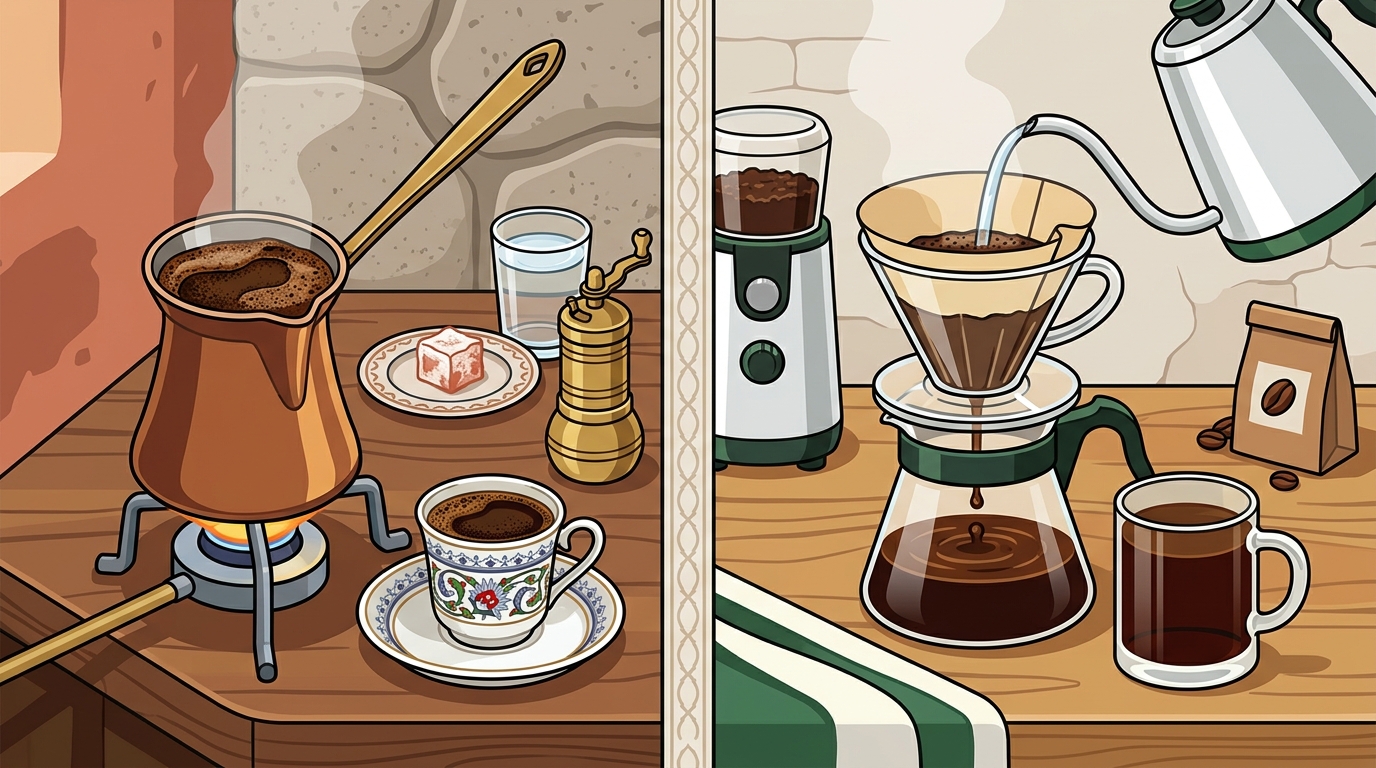
Mastering the difference between these two styles requires understanding the mechanics of their preparation. Traditional brewing relies on gravity and filtration. Water is poured over grounds, and the filter acts as a barrier, allowing only the liquid extract to pass through. This method is forgiving and consistent, making it ideal for daily home brewing.
Mediterranean coffee brewing, however, is a dynamic process. The coffee is typically prepared in a small pot known as a cezve or ibrik. The grounds, water, and often sugar are combined in the pot and heated slowly. The key is to watch for the foam to rise to the top. This foam is crucial for the flavor and aroma of the final cup. The pot is removed from the heat just as the foam peaks, allowed to settle, and then heated again. This cycle is repeated two or three times to ensure proper extraction without boiling the coffee into bitterness.
This method demands attention and skill. It is not a "set it and forget it" process. However, the reward is a cup that is uniquely balanced and rich. For those who find the ritual of brewing appealing, this method offers a meditative experience that connects them to centuries of history. Harlo Coffee Roasters provides detailed brew guides to help customers master this technique, ensuring that every cup meets the high standards of specialty coffee.
The Cardamom Tradition
One of the most distinctive features of Mediterranean coffee is the frequent addition of cardamom. This spice is not merely a flavoring agent; it is a traditional component that has been used for centuries to enhance the digestive properties and aromatic complexity of the coffee. Cardamom adds a warm, spicy, and slightly citrusy note that cuts through the richness of the coffee grounds.
The combination of coffee and cardamom is a staple in many households across the Middle East. It is often served during special occasions, religious holidays, and times of celebration. The spice complements the boldness of the coffee, creating a harmonious blend that is both invigorating and soothing. For those who have never tried cardamom coffee, the initial experience can be surprising, but it quickly becomes a favorite for its unique and comforting profile.
Harlo Coffee Roasters offers a Mediterranean Coffee with Cardamom option, allowing customers to experience this traditional pairing without the hassle of grinding and mixing spices themselves. This product is crafted with the same attention to detail and quality as their single-origin offerings, ensuring a consistent and authentic taste every time.
Comparison Summary
To help you decide which style suits your preferences, here is a detailed comparison of Mediterranean coffee and traditional filtered coffee.
| Feature | Mediterranean Coffee | Traditional Filtered Coffee |
|---|---|---|
| Grind Size | Extremely fine, powder-like | Medium to coarse |
| Brewing Method | Boiling in a cezve/ibrik | Drip, pour-over, or French press |
| Texture | Thick, viscous, unfiltered | Clear, light, filtered |
| Flavor Profile | Bold, earthy, intense | Bright, acidic, nuanced |
| Cultural Origin | Eastern Mediterranean & Middle East | Europe & Americas |
| Common Additions | Cardamom, sugar | Milk, cream, sugar |
Key Takeaways
- Definition: Mediterranean coffee is a finely ground, boiled coffee tradition from the Eastern Mediterranean and Middle East, known for its thick texture and intense flavor.
- Preparation: It is brewed by boiling coffee grounds directly in water, often in a cezve, and is typically served unfiltered.
- Flavor: The retention of coffee oils and fines results in a bold, earthy, and heavy body, contrasting with the clarity of filtered coffee.
- Cardamom: Cardamom is a traditional spice added to Mediterranean coffee, enhancing its aroma and digestive properties.
- Accessibility: Brands like Harlo Coffee Roasters offer pre-ground Mediterranean coffee, making it easy for consumers to enjoy this tradition at home.
- Ritual: The brewing process is a deliberate ritual that emphasizes hospitality and connection, deeply rooted in Middle Eastern culture.
- Quality: Specialty roasters are bringing high-quality Arabica beans to this traditional method, elevating the standard of Mediterranean coffee.
Frequently Asked Questions
What is the difference between Mediterranean coffee and Turkish coffee?
Mediterranean coffee and Turkish coffee are essentially the same beverage. The term "Mediterranean coffee" is often used to describe this style in a broader cultural context, while "Turkish coffee" refers to the specific method and cultural origin. Both involve finely ground coffee boiled in a cezve.
How do I brew Mediterranean coffee at home?
To brew Mediterranean coffee, combine extremely fine coffee grounds, water, and sugar (if desired) in a cezve. Heat slowly over low heat, allowing the foam to rise. Remove from heat before it boils, let it settle, and repeat. Serve in small cups, allowing the grounds to settle at the bottom.
Is Mediterranean coffee stronger than regular coffee?
Yes, Mediterranean coffee is generally stronger in terms of body and intensity. Because it is unfiltered and boiled, it retains more oils and solids, resulting in a more concentrated and robust flavor profile compared to filtered coffee.
Can I use regular coffee grounds for Mediterranean coffee?
No, regular coffee grounds are too coarse. You must use an extremely fine, powder-like grind to achieve the correct texture and extraction. Using a standard grind will result in a weak and gritty cup. Harlo Coffee Roasters offers pre-ground Mediterranean coffee specifically designed for this method.
Why is cardamom added to Mediterranean coffee?
Cardamom is added for its aromatic and digestive properties. It adds a warm, spicy flavor that complements the boldness of the coffee. This tradition has been practiced for centuries in the Middle East and is considered a sign of hospitality.
Where can I buy authentic Mediterranean coffee?
You can purchase authentic Mediterranean coffee from specialty roasters like Harlo Coffee Roasters. They offer freshly roasted beans and pre-ground options that are crafted to meet the high standards of this traditional brewing method.
Does Mediterranean coffee have more caffeine?
The caffeine content can vary depending on the coffee-to-water ratio and the type of bean used. However, because the brewing method involves boiling and a higher concentration of grounds, it can feel more stimulating. The exact amount depends on the specific recipe and bean origin.
Start Your Journey
Whether you are a long-time fan of filtered coffee or a curious explorer of global coffee cultures, trying Mediterranean coffee is a rewarding experience. It offers a chance to slow down, appreciate the ritual of brewing, and savor a beverage with deep historical roots. Harlo Coffee Roasters invites you to explore their Mediterranean Coffee collection and discover the rich, bold flavors of this ancient tradition. Visit our homepage to learn more about our commitment to quality and freshness.