
Authentic Mediterranean Coffee vs. Turkish Coffee: A Complete Roast Guide
Coffee culture in the Eastern Mediterranean and Middle East is often misunderstood by Western consumers who lump distinct traditions into a single category. According to historical records, the origins of coffee in the region date back to the 15th century, with the Ottoman Empire playing a pivotal role in standardizing the preparation methods we recognize today. This deep historical context means that what many call "Turkish coffee" is actually a broader family of brewing techniques shared across Greece, Lebanon, Syria, and Turkey. Understanding these nuances is critical for anyone seeking the authentic, bold, and aromatic experience that defines this coffee style. (Harlo Merch Coffee Brew)
Origins and Historical Context
The term "Mediterranean coffee" is not a single recipe but a cultural umbrella. It encompasses the coffee traditions of countries bordering the Mediterranean Sea, including Turkey, Greece, and parts of the Levant. Turkish coffee is the most globally recognized variant, but it is essential to distinguish it from Greek coffee, which is nearly identical in preparation but often differs in serving style and cultural ritual. (Premium Coffee Blends Harlo)
Historically, coffee was introduced to the Ottoman Empire in the 16th century. From there, it spread to Greece and the Balkans. The preparation method involves boiling finely ground coffee with water (and sometimes sugar) in a special pot called a cezve or ibrik. This method preserves the coffee's oils and solids, creating a unique texture that is impossible to replicate with modern drip or espresso machines.
At Harlo Coffee Roasters, we honor this tradition by sourcing high-quality Arabica beans and roasting them in small batches in Los Angeles. Our goal is to bring the authentic taste of the Eastern Mediterranean to your home, ensuring that every cup reflects the rich heritage of the region.
Grind Size and Texture Analysis
The most critical factor in brewing authentic Mediterranean coffee is the grind size. Unlike espresso, which requires a fine but porous grind, or French press, which uses a coarse grind, Mediterranean coffee requires an ultra-fine, powder-like consistency. This grind is often described as resembling flour or talcum powder.
If the grind is too coarse, the coffee will lack body and the characteristic sediment will not form. If it is too fine, it may become pasty and difficult to brew. The ideal grind allows the coffee grounds to suspend in the water during the boiling process, extracting maximum flavor and aroma before being allowed to settle at the bottom of the cup.
Harlo Coffee Roasters offers a specifically crafted Mediterranean Coffee blend with a fine grind, designed to work perfectly with traditional brewing methods. This ensures that you do not need to grind your beans at home, which can be challenging to achieve with standard burr grinders.
Brewing Methods and Equipment
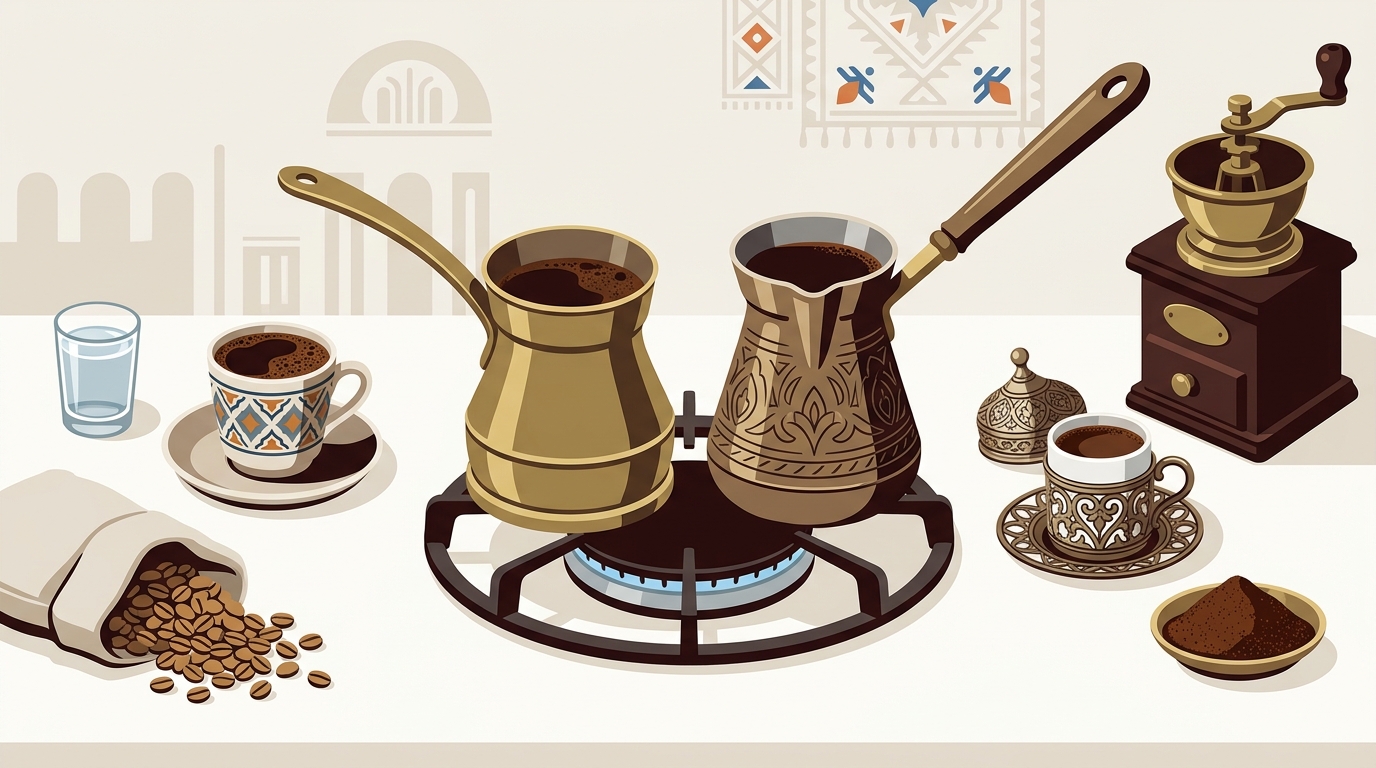
Brewing authentic Mediterranean coffee requires specific equipment and technique. The primary tool is the cezve (Turkish) or ibrik (Arabic/Greek). These pots are typically made of copper, brass, or stainless steel and have a long handle and a narrow spout to control the pour.
The Boiling Process
The brewing process is simple but requires attention. Water and coffee grounds are combined in the cezve and placed over low heat. Sugar can be added at this stage, depending on personal preference. As the coffee heats, a dark foam begins to form on the surface. This foam, known as kaimaki in Greek or crema in Turkish, is the hallmark of a well-brewed cup.
The coffee is removed from the heat just before it boils over, allowed to settle, and then reheated. This cycle is repeated two or three times to build the foam and extract the full flavor. Boiling the coffee for too long can result in a burnt, bitter taste, so timing is crucial.
Serving the Coffee
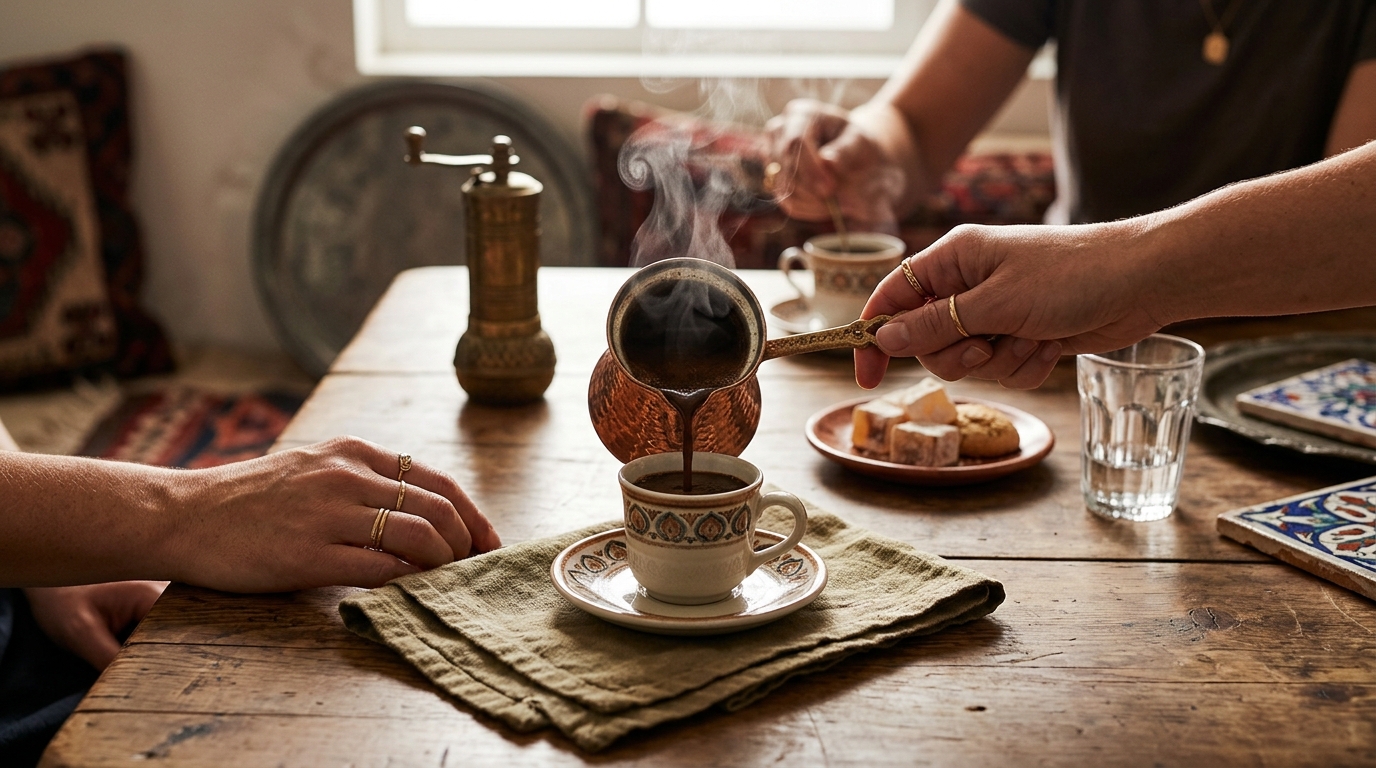
Once brewed, the coffee is poured slowly into small cups, often called fincan in Turkish or kanakia in Greek. The goal is to distribute the foam evenly among the cups. The coffee is served with a glass of water on the side, which helps cleanse the palate before tasting. The sediment at the bottom of the cup is not drunk but left behind.
Flavor Profile and Serving Traditions
The flavor profile of authentic Mediterranean coffee is bold, intense, and aromatic. Because the grounds are not filtered out, the coffee has a thick, syrupy body. The taste is often described as rich and complex, with notes of chocolate, spice, and earth.
In many cultures, this coffee is served as a gesture of hospitality. It is common to offer coffee to guests as a sign of welcome and respect. In Turkey and Greece, coffee is also used for fortune-telling, where the patterns left by the sediment in the cup are interpreted to predict the future.
Harlo Coffee Roasters' Mediterranean Coffee is crafted to deliver this bold, aromatic finish. Whether enjoyed with or without cardamom, it offers a traditional fine grind that is ready for stovetop or Mediterranean brewing. This ensures that you can experience the authentic ritual without the hassle of sourcing the right beans.
The Role of Cardamom
Cardamom is a staple in many Middle Eastern and Mediterranean coffee traditions. It is added to the coffee grounds before brewing to infuse the drink with its warm, spicy aroma. Cardamom coffee has been enjoyed for centuries and is gaining new attention today for its unique flavor and potential health benefits.
The spice not only enhances the taste but also helps to balance the bitterness of the coffee. It adds a layer of complexity that makes each cup distinct. Harlo Coffee Roasters offers Mediterranean Coffee with Cardamom, allowing you to enjoy this traditional flavor profile with ease.
Adding cardamom is a personal choice. Some prefer the pure taste of the coffee, while others enjoy the aromatic boost. Experimenting with different amounts of cardamom can help you find the perfect balance for your palate.
Comparison Summary
| Feature | Turkish Coffee | Greek Coffee | Levantine Coffee |
|---|---|---|---|
| Primary Region | Turkey, Balkans | Greece, Cyprus | Lebanon, Syria, Palestine |
| Grind Size | Ultra-fine (powder) | Ultra-fine (powder) | Ultra-fine (powder) |
| Boiling Method | Boiled in cezve | Boiled in briki | Boiled in dallah |
| Cardamom | Optional | Optional | Common |
| Serving Vessel | Fincan | Kanakia | Fincan or small cup |
| Fortune Telling | Common | Common | Rare |
Key Takeaways
- Historical Roots: Coffee traditions in the Eastern Mediterranean date back to the 15th century, with the Ottoman Empire playing a key role in standardizing the brewing method.
- Grind Consistency: Authentic Mediterranean coffee requires an ultra-fine, powder-like grind to achieve the correct texture and flavor extraction.
- Brewing Technique: The coffee is boiled in a cezve or ibrik, with the foam (kaimaki) being a critical indicator of quality.
- Flavor Profile: The result is a bold, thick, and aromatic coffee with a syrupy body, distinct from filtered or espresso-based drinks.
- Cardamom Tradition: Cardamom is a traditional addition in many regions, adding warmth and spice to the coffee.
- Cultural Significance: Serving coffee is a gesture of hospitality and is often used in social rituals, including fortune-telling.
- Harlo's Approach: Harlo Coffee Roasters crafts Mediterranean Coffee in small batches in Los Angeles, ensuring freshness and authenticity for home brewers.
Frequently Asked Questions
What is the difference between Turkish and Greek coffee?
Turkish and Greek coffee are nearly identical in preparation, using the same ultra-fine grind and boiling method. The main differences lie in the cultural context, serving vessels, and sometimes the addition of cardamom. Greek coffee is often served with a spoon to stir the sediment, while Turkish coffee may be left to settle.
Can I use regular coffee grounds for Mediterranean coffee?
No, regular coffee grounds are too coarse. You need an ultra-fine grind, similar to flour, to achieve the authentic texture and flavor. Using coarse grounds will result in a weak, watery cup without the characteristic sediment.
How do I store Mediterranean coffee to maintain freshness?
Store your coffee in an airtight container in a cool, dark place. Avoid refrigeration or freezing, as moisture can degrade the quality of the fine grounds. Harlo Coffee Roasters recommends using the coffee within a few weeks of opening for the best flavor.
Is Mediterranean coffee strong?
Yes, Mediterranean coffee is very strong due to the high coffee-to-water ratio and the extraction of the grounds. However, the strength is balanced by the rich, aromatic flavors and the optional addition of sugar or cardamom.
What is the foam on top of the coffee called?
The foam is called kaimaki in Greek and crema in Turkish. It is formed by the coffee oils and solids during the boiling process and is considered a sign of a well-brewed cup.
Can I make Mediterranean coffee without a cezve?
While a cezve is ideal, you can use a small saucepan with a long handle. However, the narrow spout of a cezve helps control the pour and preserve the foam, so it is highly recommended for an authentic experience.
Why does my coffee taste bitter?
Bitterness can result from over-extraction, which happens if the coffee is boiled for too long or removed from the heat too late. It can also be caused by using beans that are roasted too dark. Harlo Coffee Roasters offers balanced roasts that minimize bitterness while maximizing flavor.
Experience Authentic Roasts
Ready to bring the authentic taste of the Eastern Mediterranean to your home? Explore our collection of freshly roasted single origin specialty coffees, carefully sourced and roasted in small batches for exceptional flavor. Start your subscription today and never miss the first cup that starts your day.
Shop Mediterranean Coffee | View Best Sellers | Read Brew Guides