
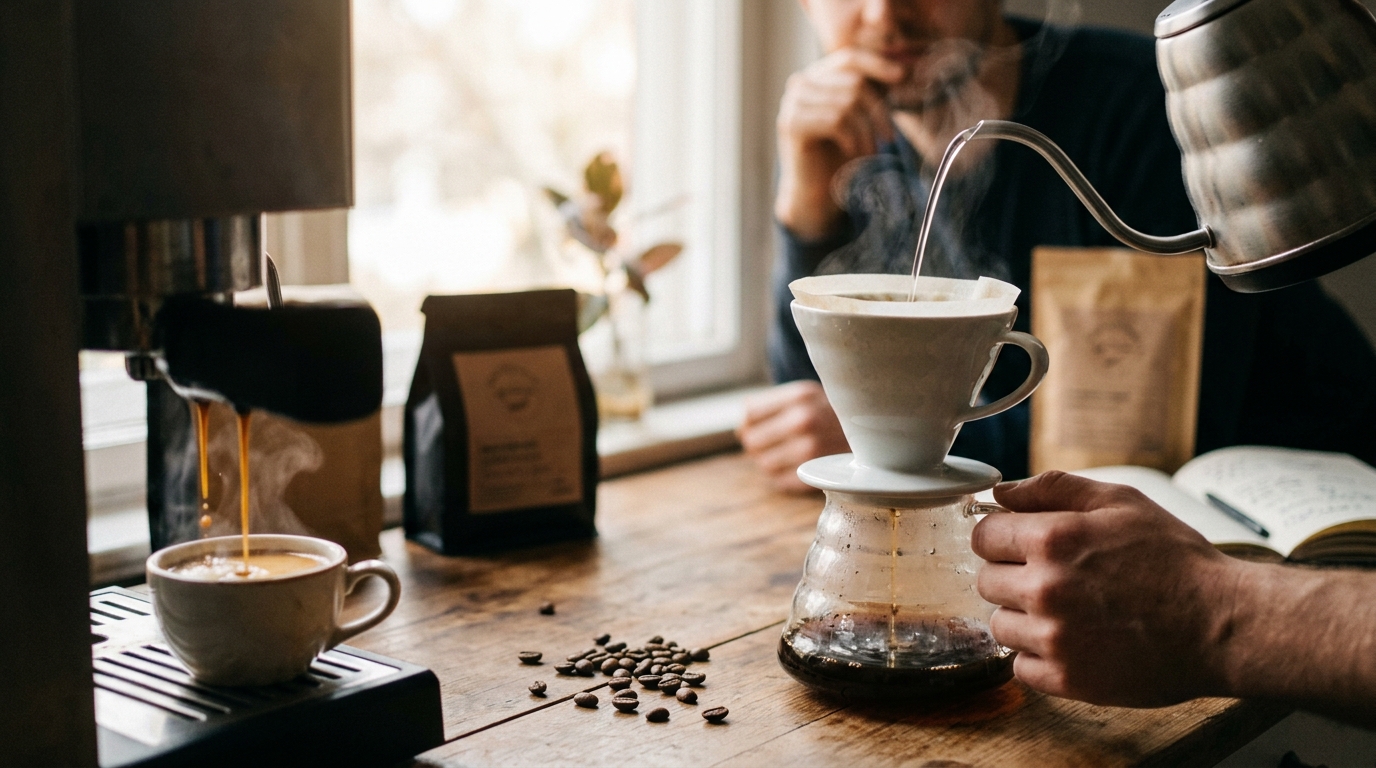
Most home brewers unknowingly sabotage their morning ritual by treating all coffee beans as interchangeable commodities. The reality is that espresso and pour over demand fundamentally different bean profiles, roast levels, and grind structures to unlock their full potential. According to recent industry data, nearly 60% of home brewing dissatisfaction stems from mismatched bean selection rather than equipment failure. This guide details the critical errors to avoid when choosing beans for these two distinct brewing methods, ensuring every cup delivers exceptional clarity and body.
The Roast Level Trap
The most frequent error in bean selection is applying a single roast preference to both brewing methods. Espresso requires a bean structure that can withstand high pressure and temperature without collapsing into bitterness. Pour over, conversely, relies on the delicate extraction of volatile aromatic compounds that are often destroyed in dark roasts.
When selecting beans for espresso, you should look for medium to medium-dark roasts. These roasts provide the necessary solubility for a quick extraction time while maintaining structural integrity. Dark roasts, often marketed as "espresso blends," can lead to a harsh, ashy taste if the bean quality is not premium. The carbon dioxide trapped in dark roasts also interferes with the crema formation, resulting in a thin, unstable shot.
For pour over, light to medium roasts are the gold standard. These beans preserve the unique terroir of the coffee, allowing notes of fruit, floral, and citrus to shine. If you use a dark roast for pour over, the water will over-extract the bitter compounds, resulting in a muddy, one-dimensional cup. At Harlo Coffee Roasters, we emphasize that the first cup of the day deserves exceptional clarity, which starts with the right roast level.
Why Roast Level Matters for Extraction
Roast level directly impacts the density of the bean. Darker beans are less dense and more porous, making them easier to extract quickly. Lighter beans are denser and require more time and heat to release their flavors. Matching the roast to the brew method ensures that the extraction time aligns with the bean's physical properties.
Ignoring Origin Characteristics
Many brewers overlook the geographic origin of their beans, assuming that all Arabica coffee tastes the same. This is a critical mistake. The soil composition, altitude, and climate of the growing region impart distinct flavor profiles that interact differently with espresso and pour over techniques.
Ethiopian beans, for example, are known for their complex floral and fruity notes. These characteristics are beautifully highlighted in a pour over, where the slow drip allows the nuanced flavors to develop. However, using a highly acidic Ethiopian bean for espresso can result in a sour, unbalanced shot if not carefully dialed in. Conversely, Brazilian or Colombian beans often provide the chocolatey, nutty base that stands up well to the intensity of espresso.
At Harlo Coffee Roasters, our single origin coffees are sourced from trusted producers who understand the specific needs of each region. By exploring single origin coffees, you can experience the unique character of each harvest. Understanding origin helps you predict how a bean will behave under pressure versus gravity.
Altitude and Flavor Complexity
Higher altitude coffees generally have higher acidity and more complex flavors. Lower altitude coffees tend to be sweeter and heavier in body. This distinction is vital for pour over, where acidity is often a desired trait. For espresso, a balance of acidity and body is needed to create a rich crema and a smooth finish.
The Freshness Timeline Error
Coffee is a perishable agricultural product. The most common mistake is buying beans that have been roasted too long ago or storing them improperly. Freshness is the single most important factor in flavor quality. According to industry standards, coffee is at its peak flavor between two weeks and four months after roasting.
Beans release carbon dioxide after roasting, a process known as degassing. If you brew too soon, the excess gas can interfere with the extraction, leading to uneven flavors. If you brew too late, the volatile aromatics have escaped, leaving you with a flat, stale cup. For espresso, the window is tighter because the high pressure amplifies any off-flavors from stale beans.
Subscribe to a coffee subscription to ensure you are always brewing with beans at their peak. This service delivers freshly roasted specialty coffee directly to your door, eliminating the guesswork of freshness. Never settle for beans that have been sitting on a shelf for months.
The Degassing Window
Understanding degassing helps you time your brew. Espresso beans often benefit from a longer degassing period of 7 to 14 days. Pour over beans can be brewed sooner, as the slower extraction is less sensitive to excess gas. However, both methods suffer significantly from beans older than six months.
Grind Size and Bean Density
>While grind size is a variable you control during brewing, the density of the bean you select dictates how it will respond to grinding. Denser beans, typically found in light roasts, require a finer grind to achieve the same extraction rate as softer, darker beans.
A common mistake is using a grind setting that is too coarse for espresso. This leads to under-extraction, resulting in a sour, watery shot. Conversely, using a grind that is too fine for pour over can cause over-extraction and bitterness. The bean you choose must be compatible with the grind size you can achieve with your equipment.
At Harlo Coffee Roasters, we provide detailed brew guides to help you dial in the perfect grind for your specific bean. These resources ensure that you get the most from every freshly roasted bag. Understanding the relationship between bean density and grind size is key to consistent results.
Adjusting for Bean Hardness
Hard beans, often from high altitudes, are more difficult to grind evenly. If your grinder cannot handle hard beans, you may end up with inconsistent particle sizes, leading to uneven extraction. Investing in a quality burr grinder is essential for handling dense, light-roasted beans.
Blends vs Single Origin Confusion
Choosing between a blend and a single origin is not just a flavor preference; it is a functional decision based on your brewing method. Blends are crafted to balance acidity, body, and sweetness, making them ideal for espresso. Single origins are selected to highlight unique regional characteristics, making them perfect for pour over.
Using a single origin for espresso can be challenging because the complex flavors may not stand up to the pressure. Using a blend for pour over can mask the unique terroir of the beans, resulting in a generic taste. Understanding the purpose of each type helps you make the right choice.
Explore our coffee blends for espresso and our single origin selection for pour over. Each category is curated to provide the best experience for its intended brewing method. This distinction is central to the Harlo Coffee Roasters philosophy of exceptional flavor.
The Role of Blending in Espresso
Blends allow roasters to combine beans with different flavor profiles to create a balanced shot. For example, a blend might combine a Brazilian bean for body with an Ethiopian bean for acidity. This balance is difficult to achieve with a single origin, which may be too acidic or too heavy on its own.
Overlooking Processing Methods
The method used to process the coffee cherry after harvest significantly impacts the flavor profile. Natural, washed, and honey processing each leave distinct residues on the bean that affect how it brews. Ignoring this factor is a common mistake that leads to unexpected flavors.
Washed coffees are clean and bright, making them excellent for pour over. They highlight the acidity and clarity of the bean. Natural processed coffees are fruity and sweet, with a heavier body. These can be challenging for espresso if not roasted carefully, as the sugars can caramelize too quickly, leading to bitterness.
At Harlo Coffee Roasters, we source specialty-grade coffee from trusted producers who use precise processing methods. By understanding processing, you can predict the flavor outcome. This knowledge is essential for selecting beans that match your taste preferences.
Impact on Solubility
Processing methods affect the solubility of the bean. Washed beans are generally more soluble, making them easier to extract. Natural beans are less soluble due to the residual sugars and mucilage. This difference requires adjustments in grind size and brew time to achieve balance.
Improper Storage Degradation
Even the best beans will fail if stored incorrectly. The primary enemies of coffee freshness are oxygen, moisture, heat, and light. Storing beans in a clear jar on the counter is a common mistake that accelerates degradation.
Always store beans in an airtight, opaque container in a cool, dry place. Avoid the refrigerator or freezer, as the moisture and temperature fluctuations can damage the bean structure. For long-term storage, freeze beans in airtight portions, but never refreeze them after thawing.
By following these storage guidelines, you preserve the integrity of the beans until the moment of brewing. This attention to detail is what separates a good cup from a great one. Visit our subscription page to receive beans that are roasted to order, minimizing the time between roasting and brewing.
The Role of Oxygen
Oxygen is the primary cause of staling. It reacts with the oils in the coffee, creating rancid flavors. Airtight containers prevent this reaction, preserving the fresh aromatics. This is especially important for light roasts, which are more susceptible to oxidation.
Comparison of Bean Selection Criteria
| Criterion | Espresso Selection | Pour Over Selection |
|---|---|---|
| Roast Level | Medium to Medium-Dark | Light to Medium |
| Origin Focus | Body and Sweetness (e.g., Brazil) | Acidity and Complexity (e.g., Ethiopia) |
| Processing | Washed or Honey for Balance | Washed for Clarity or Natural for Fruit |
| Grind Response | Requires Fine, Consistent Grind | Requires Medium-Fine, Even Grind |
| Freshness Window | 7-14 Days Post-Roast | 2-4 Weeks Post-Roast |
Key Takeaways
- Match roast level to brew method: medium-dark for espresso, light-medium for pour over.
- Understand origin characteristics: Ethiopian beans for clarity, Brazilian beans for body.
- Prioritize freshness: brew within two weeks to four months of roasting.
- Consider bean density: denser beans require finer grinds for espresso.
- Choose blends for espresso balance and single origins for pour over complexity.
- Respect processing methods: washed for brightness, natural for fruitiness.
- Store beans in airtight, opaque containers to prevent oxidation.
Frequently Asked Questions
Can I use the same beans for espresso and pour over?
While you can use the same beans, the results will vary significantly. Espresso requires a bean that can withstand high pressure, often favoring medium-dark roasts. Pour over benefits from light roasts that highlight acidity. Using a bean optimized for one method in the other may result in suboptimal flavor.
How does origin affect espresso flavor?
Origin determines the base flavor profile. Brazilian beans provide chocolate and nut notes, while Ethiopian beans offer floral and fruity hints. For espresso, a blend of origins is often used to balance these characteristics, creating a complex and balanced shot.
What is the best grind size for espresso beans?
Espresso beans require a fine grind, similar to table salt. The exact setting depends on the bean's density and roast level. Denser, lighter beans may need a slightly finer grind to achieve proper extraction. Adjust based on taste, aiming for a shot time of 25-30 seconds.
Why do my pour over coffees taste bitter?
Bitterness in pour over is often caused by over-extraction. This can happen if the grind is too fine, the water is too hot, or the brew time is too long. Using a lighter roast and a coarser grind can help reduce bitterness and highlight the bean's natural sweetness.
How long should I wait to brew after roasting?
For espresso, wait 7-14 days to allow for degassing. For pour over, you can brew sooner, but waiting 2-4 weeks ensures the flavors have stabilized. Brewing too soon can lead to uneven extraction due to excess carbon dioxide.
What is the difference between washed and natural processed coffee?
Washed coffee is cleaned with water, resulting in a clean, bright flavor. Natural coffee is dried with the fruit intact, leading to a fruitier, sweeter profile. Washed coffees are often preferred for pour over, while natural coffees can add complexity to espresso blends.
How do I store coffee beans to maintain freshness?
Store beans in an airtight, opaque container in a cool, dry place. Avoid exposure to light, heat, and moisture. Do not refrigerate or freeze beans unless storing for long periods, and never refreeze them after thawing.
Start Brewing with Confidence
Selecting the right beans is the foundation of exceptional coffee. By avoiding these common mistakes, you can unlock the full potential of your espresso and pour over brews. At Harlo Coffee Roasters, we are dedicated to providing freshly roasted specialty coffee that meets these exacting standards. Explore our best selling coffee collection to find the perfect beans for your home. Visit our subscription page to ensure a steady supply of peak-freshness beans. Your first cup is everything, and it starts with the right bean.