
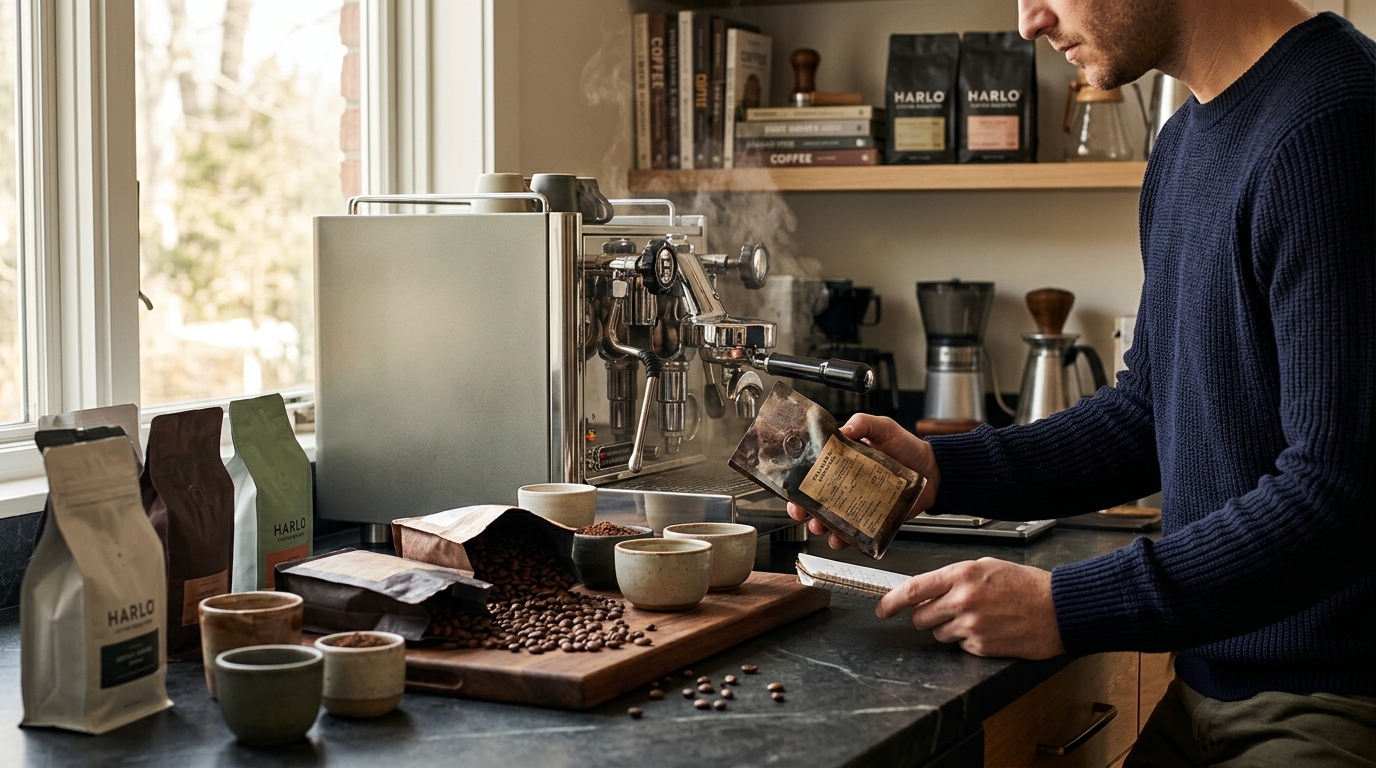
Most home baristas believe that buying expensive beans guarantees a perfect shot. Specialty coffee is defined by its traceability and quality grading, but the roast profile is the critical variable that determines whether your machine extracts sweetness or sourness. Data from industry reports indicates that over 60% of home espresso failures stem from mismatched grind-to-roast ratios rather than equipment defects. This guide dissects the most frequent errors in roast selection and provides the technical framework to align your beans with your hardware.
Understanding Roast Profile Mismatch
The most common mistake is selecting a roast that does not align with the extraction dynamics of your specific machine. Espresso operates under high pressure, typically between 9 and 9.5 bars. This pressure forces water through a compacted puck of coffee in roughly 25 to 30 seconds. If the roast is too light, the dense cellular structure of the bean resists extraction, leading to under-extraction. This results in a shot that is sour, thin, and lacks body.
Conversely, a roast that is too dark for your machine can lead to channeling. Darker beans are more porous and brittle. When ground, they create fines that pack too tightly, causing water to find the path of least resistance. This creates uneven extraction where some parts of the puck are over-extracted (bitter) and others are under-extracted (sour). Chain coffee roasters often utilize very dark profiles to mask defects, but this approach fails to highlight the nuanced flavors found in high-grade Arabica beans.
To avoid this, you must match the roast level to your machine's temperature stability. Machines with dual boilers handle medium roasts better than entry-level single-boiler machines, which may struggle to maintain the higher temperatures required for light roasts without scorching the water.
The Freshness Timing Error
Timing is as critical as the roast level itself. Espresso requires degassing beans to function correctly. Freshly roasted coffee releases carbon dioxide (CO2) aggressively. If you grind and pull a shot immediately after roasting, the excess CO2 interferes with the water's contact with the coffee solids. This results in a turbulent, gushing shot with a pale, short-lived crema.
Harlo Coffee Roasters emphasizes that freshly roasted specialty coffee is crafted in small batches to ensure peak flavor. However, "fresh" does not mean "immediate." The optimal window for espresso is typically between 7 and 21 days post-roast. During this window, the CO2 release slows to a manageable rate, allowing for a stable, even extraction. Beans older than 30 days begin to lose their volatile aromatic compounds, resulting in a flat, cardboard-like taste profile that no amount of dialing in can fully restore.
Ignoring Origin Flavor Profiles
Many consumers treat all espresso beans as interchangeable. This is a fundamental error in coffee selection. The geographic origin of the bean dictates its inherent acidity, sweetness, and body. Single origin coffee highlights the unique character, terroir, and flavor of every origin. Ignoring these distinctions leads to unpredictable shots.
For example, Ethiopian beans often possess bright, fruity, and floral notes. When roasted for espresso, they require a lighter to medium roast to preserve these delicate acids. If you roast them dark, you destroy the fruit notes and are left with a generic, woody bitterness. On the other hand, Brazilian or Colombian beans often have lower acidity and higher sweetness. These beans are more forgiving and can handle a darker roast while still maintaining a chocolatey, nutty profile that stands up well to milk.
Single Origin vs. Blends for Espresso
Choosing between single origin and blends is not about quality; it is about consistency and flavor preference. Blends are engineered for balance. By combining beans from different regions, roasters can mask the inconsistencies of a single harvest and create a reliable flavor profile. This is why many traditional Italian roasts are blends.
Single origin espresso offers a distinct tasting experience. It allows you to taste the specific agricultural conditions of the harvest. However, it requires more precise dialing in. If you are new to espresso, starting with a well-crafted blend can provide a more forgiving entry point. Coffee blends are often designed to provide a consistent base of sweetness and crema, making them ideal for daily drinking.
Correcting Grind Size for Dark Roasts
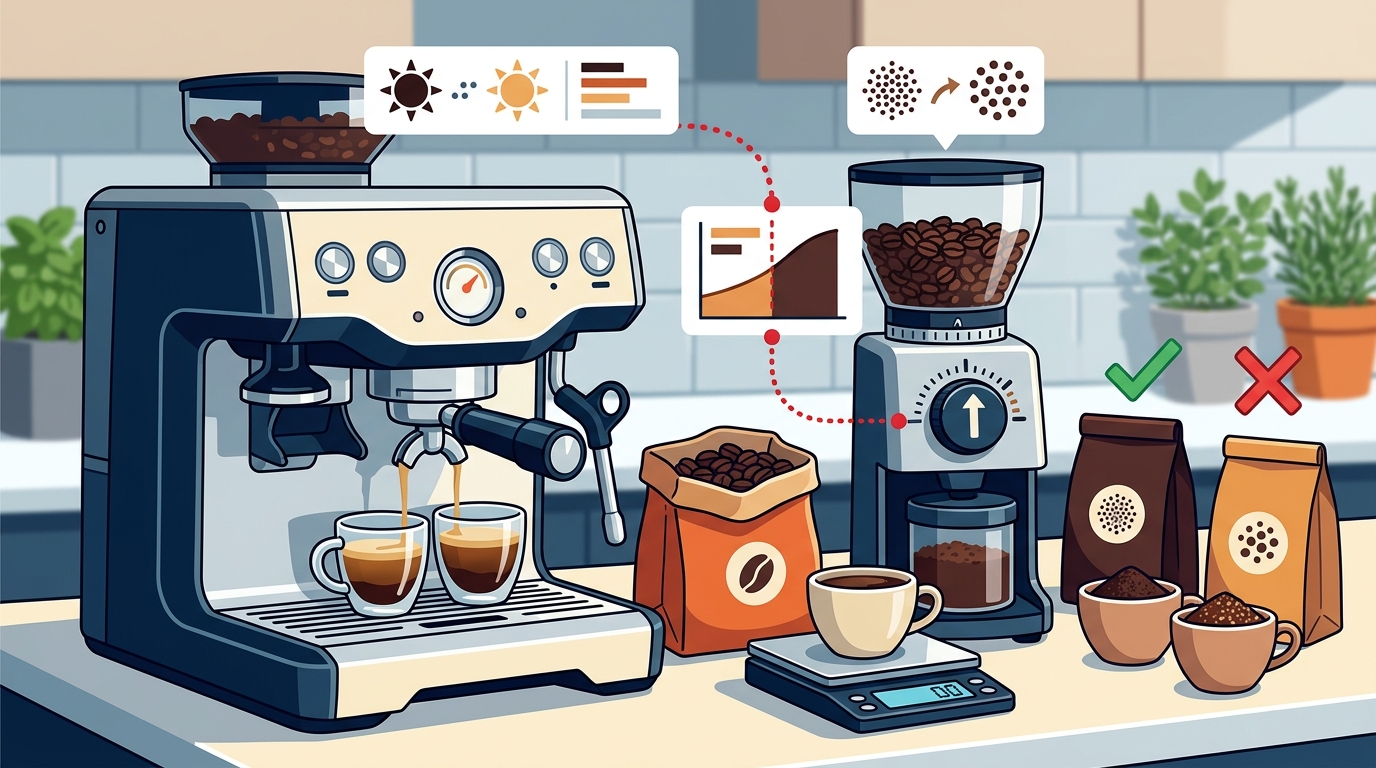
When you switch roast levels, you must adjust your grind size. Darker roasts are less dense and more brittle than lighter roasts. If you use the same grind setting for a dark roast as you would for a light roast, the dark roast will produce more fines. These fines clog the filter basket, increasing resistance and causing the shot to run too fast or channel.
To correct this, you generally need to coarsen the grind slightly for darker roasts to reduce the surface area and allow water to flow evenly. For lighter roasts, you will need a finer grind to increase extraction time and surface contact. This adjustment is part of the essential grind guide process that ensures every cup is balanced.
Roast Profile Comparison
| Roast Level | Best For | Common Mistake | Flavor Profile |
|---|---|---|---|
| Light Roast | Advanced machines, fruity origins | Under-extraction due to low temp | Bright, acidic, floral |
| Medium Roast | Most home machines, balanced taste | Ignoring degassing time | Sweet, balanced, complex |
| Dark Roast | Traditional espresso, milk drinks | Channeling due to fines | Bold, chocolatey, low acid |
Key Takeaways
- Match Roast to Machine: Single-boiler machines may struggle with light roasts due to temperature instability.
- Respect the Degassing Window: Pull shots between 7 and 21 days post-roast for optimal CO2 release.
- Understand Origin: Ethiopian beans need lighter roasts to preserve fruit notes; Brazilian beans handle dark roasts well.
- Adjust Grind Size: Darker roasts require coarser grinds to prevent channeling and fines accumulation.
- Blend vs. Single Origin: Blends offer consistency; single origins offer distinct terroir expression.
- Avoid Chain Roasts: Ultra-dark roasts often mask defects and lack the complexity of specialty coffee.
- Invest in Freshness: Small-batch roasting ensures the volatile compounds necessary for crema and aroma are intact.
Frequently Asked Questions
What is the best roast for espresso beginners?
A medium roast is generally the best starting point. It offers a balance of sweetness and body that is forgiving of minor dialing-in errors while still providing complexity.
Why does my espresso taste sour?
Sourness usually indicates under-extraction. This can be caused by a roast that is too light for your machine's temperature, a grind that is too coarse, or a brew time that is too short.
Can I use light roast beans for espresso?
Yes, but it requires a machine with precise temperature control and a high-quality grinder. Light roasts are denser and require more energy to extract, which can lead to uneven extraction in less capable machines.
How long should I wait to use freshly roasted beans?
Wait at least 7 days after the roast date. This allows the carbon dioxide to dissipate enough to allow for a stable extraction and proper crema formation.
What is the difference between Mediterranean coffee and espresso?
Mediterranean coffee is typically a very fine grind, often roasted dark, and brewed using a stovetop method or specific pressure techniques. It is distinct from traditional Italian espresso in its preparation and texture.
Do I need a specific grinder for dark roasts?
While any good grinder works, dark roasts produce more fines. A grinder with low retention and consistent burrs helps manage these fines and prevents channeling in the portafilter.
What is single origin coffee?
Single origin coffee is coffee grown in a specific geographic region, such as a single farm or cooperative. It highlights the unique flavor characteristics of that location.
Why does my crema disappear quickly?
Quickly disappearing crema often indicates that the beans are too old or were roasted too recently. Proper degassing is essential for stable crema.
Start Your Espresso Journey
Selecting the right roast is the foundation of a great espresso. By understanding the interplay between roast profile, origin, and freshness, you can transform your daily routine into a ritual of exceptional flavor. Explore our curated collection of best selling coffee to find the perfect blend for your machine. Visit Harlo Coffee Roasters today to discover single origins and blends roasted to order in Los Angeles.