
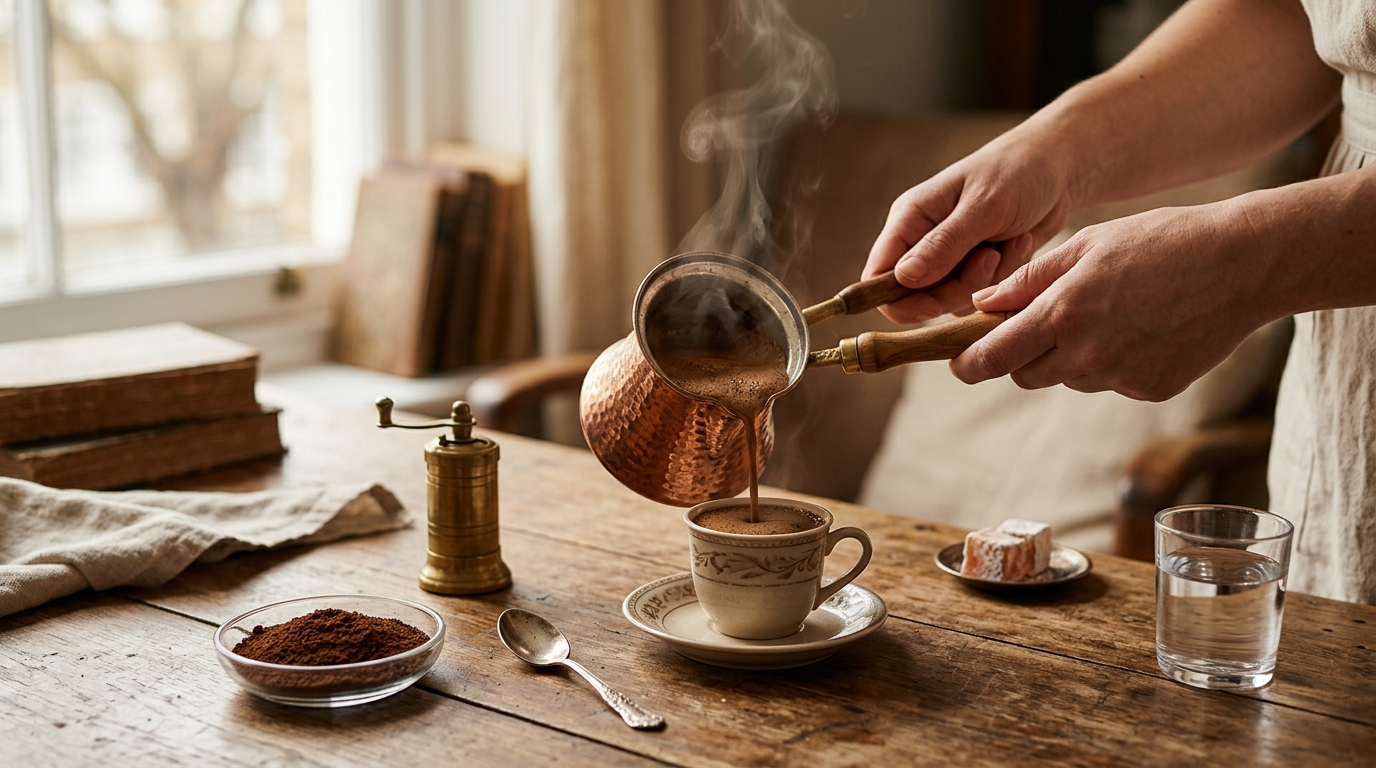
Every morning begins somewhere, and for millions, that place is the ritual of brewing Turkish coffee. This ancient preparation method is not merely about caffeine delivery; it is a cultural cornerstone that demands precision, patience, and respect for the bean. According to recent cultural heritage analyses, the tradition of Turkish coffee preparation has been recognized by UNESCO as an Intangible Cultural Heritage of Humanity, highlighting its global significance. At Harlo Coffee Roasters, we believe that mastering this craft transforms a simple morning routine into a moment of mindfulness and connection.
Understanding Turkish Coffee
Turkish coffee is defined as a method of preparing coffee by boiling finely ground coffee beans in a special pot called a cezve or ibrik. Unlike espresso, which relies on pressure, or drip coffee, which uses gravity, Turkish coffee relies on a unique suspension technique. The grounds are not filtered out; instead, they settle at the bottom of the cup after brewing. This results in a thick, creamy foam known as "crema" or "kaimaki," which is considered the hallmark of a well-brewed cup.
The flavor profile is intense and aromatic. Because the grounds remain in the liquid, the coffee retains all its essential oils and soluble solids. This creates a body that is heavier than any other brewing method. At Harlo Coffee Roasters, we source high-quality Arabica beans that stand up to this rigorous preparation. Our Mediterranean Coffee collection offers finely ground options that are specifically crafted for this traditional style, ensuring you get the authentic experience without the guesswork.
The history of this beverage stretches back centuries, originating in the Ottoman Empire. It spread across the Middle East, North Africa, and eventually Europe. Today, it remains a symbol of hospitality. In many cultures, refusing a cup of Turkish coffee is considered rude. The preparation is a gesture of care, requiring the brewer to pay close attention to the guest's preference for sweetness.
Essential Tools for Brewing
To brew authentic Turkish coffee, you need specific equipment. Standard kitchen tools often fail to capture the necessary heat control and foam formation. Here is what you need to get started.
The Cezve or Ibrik
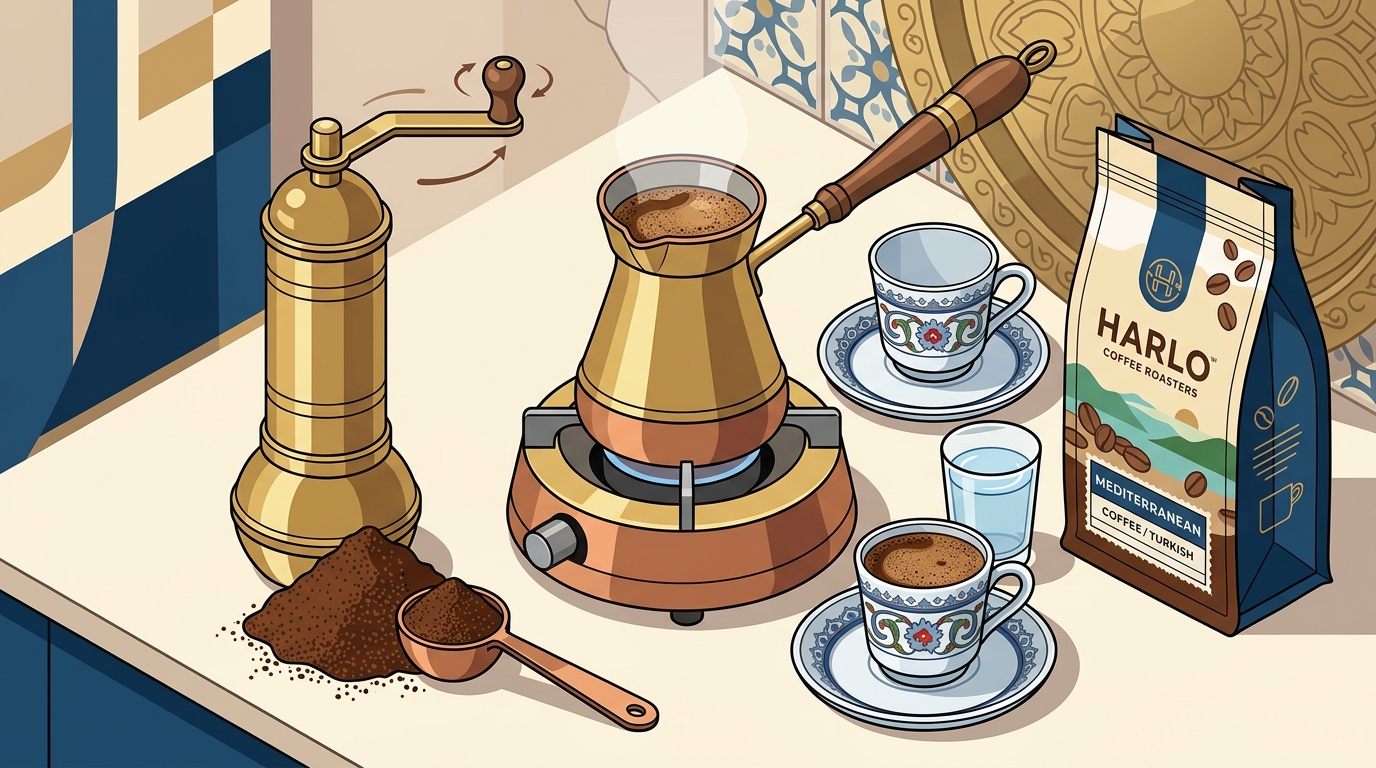
The cezve is the heart of the brewing process. It is a small pot with a long handle, typically made of copper, brass, or stainless steel. Copper is the traditional choice because it conducts heat evenly and quickly, allowing for precise temperature control. The shape of the cezve is also critical. It should have a narrow neck and a wider base. This geometry helps trap the steam and pressure, forcing the grounds to rise and form the coveted foam.
The Coffee Grind
The grind size is the most critical variable in Turkish coffee. It must be extremely fine, almost like powdered sugar or flour. If the grind is too coarse, the coffee will taste weak and gritty. If it is too fine, it may become muddy and difficult to settle. Harlo Coffee Roasters offers a finely ground Mediterranean Coffee that is pre-processed to the perfect consistency for this method. Using a pre-ground option ensures consistency and saves time, allowing you to focus on the brewing ritual.
The Heat Source
Traditionalists use sand or hot ash to heat the cezve. This provides a gentle, even heat that prevents burning. However, for home brewing, a stovetop is the standard. A gas stove is ideal because you can see the flame and adjust it instantly. Induction cooktops can also work, but they require more attention because they heat up very quickly. Avoid microwaves, as they do not allow for the gradual heating process required for proper foam formation.
Step-by-Step Brewing Process
Brewing Turkish coffee is a science of patience. The goal is to extract the flavor without boiling the coffee to the point of bitterness. Follow these steps to achieve the perfect cup.
Step 1: Measure the Ingredients
For each cup, use one tablespoon of finely ground coffee. Add one cup of cold water. The water should be cold to allow the coffee grounds to hydrate slowly as the temperature rises. This slow extraction helps develop the complex flavors. Add sugar at this stage if desired. The traditional ratio is one teaspoon of sugar per cup, but you can adjust this to your taste. The three levels of sweetness are: sade (no sugar), orta (medium), and şekerli (sweet).
Step 2: Mix Before Heating
Stir the coffee, water, and sugar together in the cezve before placing it on the heat. This ensures that the grounds are evenly distributed. Do not stir again once the heat is applied. Stirring during heating disrupts the foam formation and can lead to a flat cup. Place the cezve on the stove over low to medium-low heat.
Step 3: The First Rise
Watch the coffee closely. As it heats, a dark foam will begin to form on the surface. This is the crema. Let it rise until it reaches the rim of the cezve. Do not let it boil over. Boiling destroys the foam and burns the coffee, resulting in a harsh, bitter taste. Remove the cezve from the heat just as the foam peaks.
Step 4: The Second Rise
Let the coffee rest for a few seconds. Then, place it back on the heat. Watch it rise again. This second rise is crucial for developing the full body of the coffee. Remove it from the heat again before it boils over. Some brewers repeat this process a third time for a stronger cup, but two rises are usually sufficient for a balanced flavor.
Step 5: The Rest and Serve
After the final rise, remove the cezve from the heat and let it sit for a minute. This allows the grounds to settle to the bottom. Pour the coffee slowly into small cups. Pouring slowly helps preserve the foam on top. If you pour too quickly, the foam will break, and the grounds will mix with the liquid. Each cup should have a layer of foam on top, indicating a successful brew.
Serving Traditions and Etiquette
Serving Turkish coffee is as important as brewing it. The ritual is steeped in tradition and hospitality. Understanding these customs enhances the experience for both the brewer and the guest.
The Order of Service
In traditional settings, the host serves the guests first, followed by themselves. This is a sign of respect and generosity. The coffee is served in small, delicate cups called finjans. These cups are designed to keep the coffee hot while allowing the drinker to sip slowly. A glass of water is always served alongside the coffee. The water is meant to cleanse the palate before drinking, allowing you to appreciate the full flavor profile of the coffee.
Sweet Treats
Turkish coffee is traditionally paired with sweet treats. Lokum, also known as Turkish delight, is the most common accompaniment. The sweetness of the lokum balances the bitterness of the coffee. Other traditional pairings include baklava or chocolate. The combination of bitter coffee and sweet dessert is a classic flavor profile that has endured for centuries.
Fortune Telling
After finishing the coffee, the cup is often turned upside down on the saucer to let the grounds settle. This practice is the basis of Turkish coffee fortune telling. The patterns formed by the grounds are interpreted to predict the future. While this is a cultural tradition, it adds an element of fun and mystery to the ritual. It encourages conversation and connection among friends and family.
Common Mistakes to Avoid
Even experienced brewers can make mistakes when preparing Turkish coffee. Avoiding these common pitfalls will ensure a consistent and delicious result every time.
Boiling the Coffee
The most common mistake is letting the coffee boil. Boiling causes the foam to collapse and the coffee to become bitter. The key is to remove the cezve from the heat just before it boils. If you miss the timing, let it cool slightly before trying again. Never let the coffee come to a rolling boil.
Using the Wrong Grind
Using pre-ground coffee meant for drip or espresso will result in a poor cup. These grinds are too coarse for Turkish coffee. The grounds will not suspend properly, and the flavor will be weak. Always use coffee specifically ground for Turkish or Mediterranean styles. Harlo Coffee Roasters provides finely ground options that are optimized for this method.
Stirring After Heating
Stirring the coffee after it has started to heat disrupts the foam. The foam is essential for the texture and flavor of the coffee. Once the coffee is on the heat, let it rise naturally. Do not interfere with the process. Trust the method and let the physics of the cezve do the work.
Using Hot Water
Starting with hot water reduces the time the grounds have to hydrate. This can lead to uneven extraction and a flat taste. Always start with cold water. This allows the flavors to develop gradually as the temperature increases. It is a small detail that makes a significant difference in the final cup.
Key Takeaways
- Grind Size is Critical: Turkish coffee requires an extra-fine grind, similar to powder, to achieve the correct texture and flavor extraction.
- Control the Heat: Use low to medium-low heat and remove the cezve from the heat source just before the coffee boils to preserve the foam.
- Never Stir After Heating: Stirring the coffee once it is on the heat destroys the crema and prevents proper foam formation.
- Start with Cold Water: Using cold water allows for gradual hydration of the grounds, resulting in a more balanced and complex flavor profile.
- Respect the Tradition: Serve with a glass of water and a sweet treat to honor the cultural heritage of this ancient beverage.
- Quality Beans Matter: Use high-quality Arabica beans, such as those found in Harlo Coffee Roasters' Mediterranean collection, for the best results.
- Patience is Key: The brewing process requires attention and patience. Rushing the steps will lead to a bitter or flat cup.
Frequently Asked Questions
What is the difference between Turkish coffee and regular coffee?
Turkish coffee is brewed by boiling finely ground coffee beans in a cezve, whereas regular coffee is typically brewed by dripping hot water through grounds or using pressure. The key difference is that Turkish coffee is unfiltered, meaning the grounds remain in the cup, creating a thicker body and intense flavor.
Can I use regular espresso grounds for Turkish coffee?
No, espresso grounds are too coarse for Turkish coffee. They will not create the necessary foam and will result in a gritty, weak cup. You need an extra-fine grind, specifically designed for Turkish or Mediterranean coffee, to achieve the authentic texture.
How much sugar should I add to Turkish coffee?
The amount of sugar is a matter of personal preference. Traditionally, there are three levels: sade (no sugar), orta (one teaspoon per cup), and şekerli (two teaspoons per cup). It is best to add the sugar before brewing so it dissolves completely into the coffee.
Why does my Turkish coffee lack foam?
Lack of foam is usually caused by boiling the coffee, using the wrong grind size, or stirring after heating. Ensure you use an extra-fine grind, start with cold water, and remove the cezve from the heat just before it boils. Also, make sure your cezve is clean, as residual oils can inhibit foam formation.
Is Turkish coffee healthy?
Turkish coffee is rich in antioxidants and has been linked to various health benefits, including improved heart health and cognitive function. However, it also contains caffeine, so consumption should be moderate. The unfiltered nature of the coffee means it contains cafestol, a compound that can raise cholesterol levels if consumed in large quantities.
How do I clean a copper cezve?
Copper cezves require special care to prevent tarnishing. Avoid using harsh abrasives or dishwashers. Instead, clean it by hand with mild soap and water. You can use a mixture of lemon juice and salt to polish the copper and remove stains. Dry it thoroughly immediately after washing to prevent water spots.
Can I make Turkish coffee with a French press?
While you can brew coffee in a French press, it is not the traditional method for Turkish coffee. The French press does not allow for the controlled heating and foam formation required for authentic Turkish coffee. For the best results, use a cezve or ibrik on a stovetop.
Start Your Ritual
Brewing authentic Turkish coffee is a journey of discovery. It requires practice, but the reward is a deeply satisfying and culturally rich experience. By using the right tools and techniques, you can bring this ancient tradition into your home. Harlo Coffee Roasters is dedicated to helping you master this craft. Explore our Mediterranean Coffee collection to find the perfect finely ground beans for your cezve. Visit our Brew Guides for more expert tips on mastering your morning ritual. Start your journey to the perfect cup today by shopping our full collection and experiencing the difference that fresh, small-batch roasting makes.